Wednesday, November 6, 2019

How to Setup WordPress Email Logs (and WooCommerce Email Logs)

Do you want to set up email logs on your WordPress or WooCommerce website?

Email logs allow you to monitor the emails sent by your WordPress site to the users. This helps you troubleshoot issues and check the status of email notifications sent by your WordPress website.

In this article, we will show you how to easily set up WordPress email logs and WooCommerce email logs.

After following this tutorial, you’ll be able to view the email logs directly from your WordPress admin area in an easy to understand format.
How to set up email logs in WordPress and WooCommerce

Why Set Up Email Logs in WordPress or WooCommerce?

Whether you are running a small business website using WordPress or a WooCommerce store, WordPress automatically sends certain email notifications to your users.

On a typical WordPress website, these emails include password reset emails, new user notification, password change notification, comments, and WordPress update notifications.

If you are also running an online store, then email becomes even more important. WooCommerce will send out customer receipts, order details, new order notifications, and user account emails on a regular basis.

As you can see, email notifications are crucial for your website to function properly and deliver the best user experience.

You need to make sure that those emails reach users’ inbox and don’t just disappear or end up in spam.

The best way to do this is by using a proper SMTP service provider to ensure email deliverability. For more details, see our guide on how to fix WordPress not sending email issue.

You would also want to see which emails are sent and to whom. This allows you to keep a record of email activity which comes in handy in several situations.

Following are just a few of those situations when email log comes in handy:

  • Ensure that email notifications are delivered promptly
  • Track your WordPress contact form plugin emails
  • You can see if emails sent by a plugin are working
  • Keep a track of user activity using the email logs
  • Track user activity if you run a membership website or sell online courses
  • Keep email log of your WooCommerce orders, reciepts, and customer notifications

That being said, let’s see how to easily setup email logs on your WordPress or WooCommerce website.

Setting up Email Logs in WordPress & WooCommerce

For this tutorial, we will be using the WP Mail SMTP plugin. It allows you to send WordPress emails using any SMTP service provider including Gmail, Outlook, SendGrid, Amazon SES, etc.
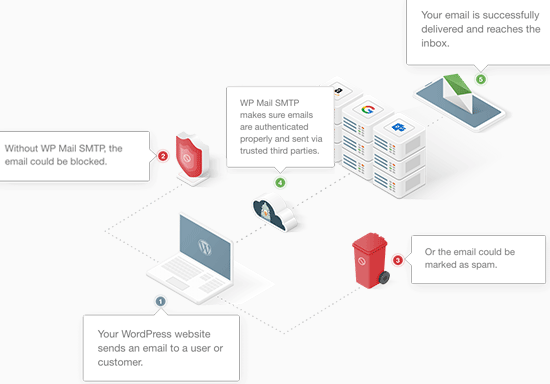
How WP Mail SMTP works

Step 1. Install and Setup WP Mail SMTP

The first thing you need to do is install and activate the WP Mail SMTP plugin. For more details, see our step by step guide on how to install a WordPress plugin.

Upon activation, you need to visit WP Mail SMTP » Settings page to configure the plugin settings.

First, you’ll need to enter your license key. You can find this information under your account on WP Mail SMTP website.
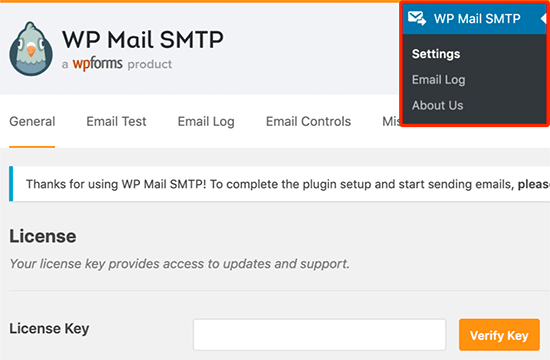
WP Mail SMTP license key

Simply, copy and paste your license key and then click on the Verify button.

After that, you need to scroll down to select how you would like to send your WordPress emails under the Mailer section.

WP Mail SMTP works with any SMTP service. It comes with easy configuration options for the most popular SMTP service providers like Gmail, Outlook, Sendinblue, Mailgun, Sendgrid, Amazon SES, or Other SMTP services.
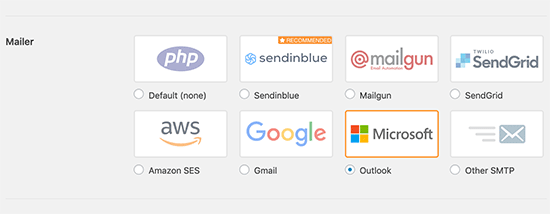
Select mailer

Clicking on the mailer will show you instructions to set it up.

The default option is set to PHP mailer. We don’t recommend using that because it is not reliable. Since most WordPress hosting servers are not properly configured for emails, this option will mean that your WordPress emails may never reach users’ inbox or even spam folder.

We recommend using a provider like SendinBlue or Mailgun that’s optimized for best email deliverability.

If you choose Other SMTP as your mailer option, then you’ll need to provide SMTP settings which you can get from your SMTP service providers website.

  • SMTP Host: You smtp host address which usually looks like this smtp.yoursmtpserver.com
  • Encryption: Usually it is either SSL or TLS
  • SMTP Port: Usually it is 465
  • Authentication: Turn on authentication
  • Username: Username provided by your SMTP service usually it is your email address.
  • Password: Password for your SMTP service
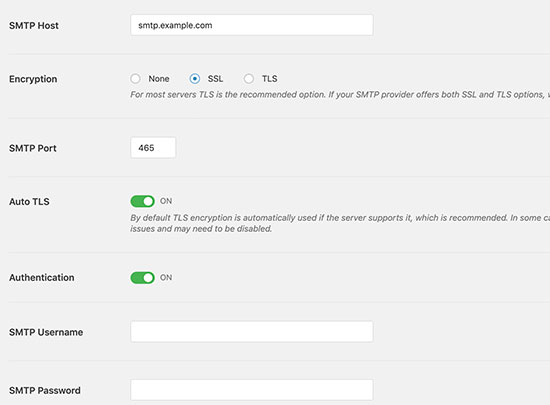
Other SMTP service provider

After you have entered your mailer credentials, don’t forget to click on the ‘Save Settings’ button to store your settings.

Bonus: It’s important to use a professional business email address to ensure your emails look trustworthy.

Step 2. Enable Email Log Feature

Now that you have set up mailer settings in the WP Mail SMTP plugin. It is time to turn on the email logging feature.

From the plugin’s settings page, switch to the ‘Email Log’ tab and check the box next to ‘Enable log’ option.
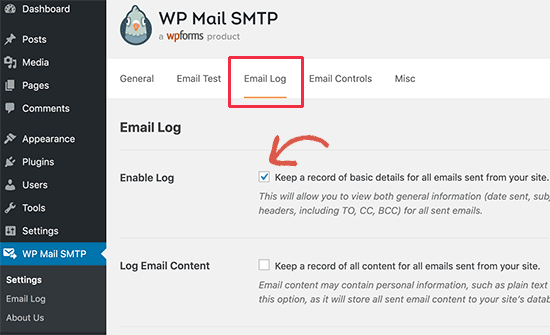
Turn on email logs

The email log option will save general and troubleshooting information about each email message. Including the date and time, subject, email status, email addresses of the sender and recipient, BCC and CC, attachment, etc.

The plugin also allows you to enable complete WordPress email logs. We don’t recommend enabling complete email logs because it would save all contents of the email including private or sensitive information in your WordPress database as plain text.

Don’t forget to click on the ‘Save settings’ button to save your changes.

Step 3. Testing WP Mail SMTP Setup

Now that you have set up the WP Mail SMTP plugin, let’s test it to make sure that everything is working as expected.

WP Mail SMTP makes this step easy. Go to the plugins settings page WP Mail SMTP » Settings page and switch to the ‘Email Test’ tab.
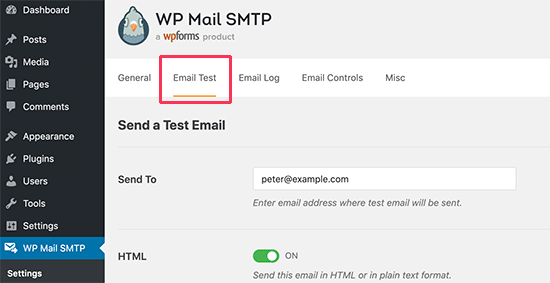
Test WordPress SMTP email settings

From here, simply enter your email address and click on the ‘Send Email’ button.

The plugin will now send a test email to the address you provided. It will then show you the status of the email delivery on screen.
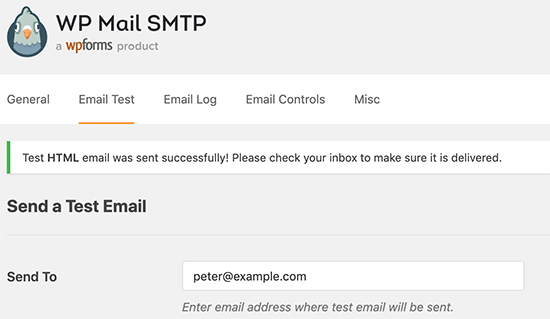
Email sent successfully

Step 4. Viewing Your Email Logs in WordPress

You can view your WordPress email logs at any time without leaving the WordPress admin area.

Simply go to WP Mail SMTP » Email Log page. You’ll see the log with a list of entries since you enabled the email log.
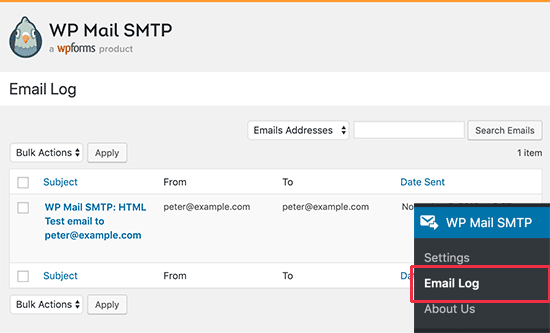
Email log entries

To view entry details, take your mouse over it and then click on the ‘View’ link below it. This will open the email log entry with a detailed view.
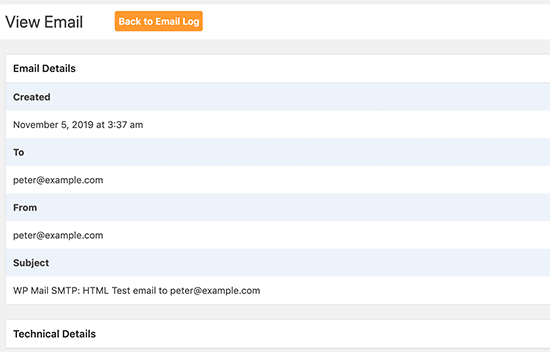
Email log entry

You can also use the search feature to look for entries by email address, subject & headers, or by content (if you enabled content logging).

You can also delete older entries from your email log. You can use the ‘Delete’ link below any entry to delete a single entry.

You can also select multiple entries and click on the Bulk Actions drop-down menu to select ‘Delete’ and then click on the Apply button.
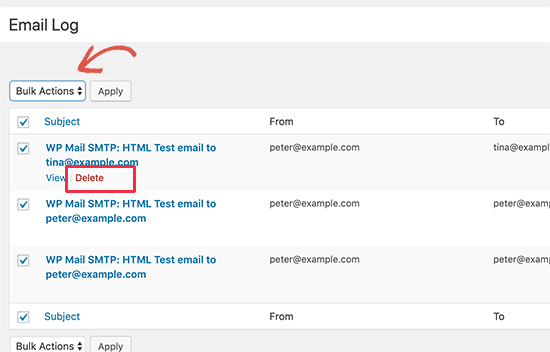
Delete email log entries in WordPress

We hope this article helped you learn how to set up WordPress email logs and WooCommerce email logs. You may also want to see our guide on how to monitor user activity in WordPress with security audit logs.

If you liked this article, then please subscribe to our YouTube Channel for WordPress video tutorials. You can also find us on Twitter and Facebook.

The post How to Setup WordPress Email Logs (and WooCommerce Email Logs) appeared first on WPBeginner.


November 06, 2019 at 06:05PM
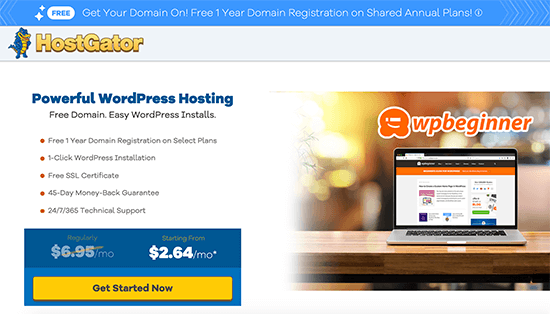
WPBeginner Users Get a Free Domain and 62% off HostGator Web Hosting

Do you want to start a blog, make a new website, transfer your blog from WordPress.com to WordPress.org, or simply want to switch hosting companies?

If your answer is yes, then let us make it super easy for you.

Our friends over at HostGator are offering an exclusive limited time deal for WPBeginner users.

Basically, you’ll get a 62% discount on your WordPress hosting along with with a free domain name and SSL certificate.

HostGator Special Offer for WPBeginner Readers

During this limited time offer, you’ll be able to get WordPress hosting for as low as $2.64 per month with a free domain name + free SSL certificate.

→ Claim This Limited Time HostGator Deal ←

Why Choose HostGator to Make Your Website?

HostGator is one of the oldest and most well-known web hosting companies around. They offer affordable hosting plans for businesses of all sizes.

Our founder and CEO, Syed Balkhi, has been a loyal HostGator customer since 2007. In fact, WPBeginner itself started on HostGator’s shared hosting plan.

As our site grew, we upgraded to their VPS hosting plan, then a dedicated server, and now it is hosted on HostGator’s enterprise-level custom made infrastructure.

We can confidently say, that HostGator has been with us every step of the way through out our WordPress journey. They have a helpful support team, rock-solid infrastructure, one-click WordPress install, and a ton of other features.

NOTE: At WPBeginner we believe in transparency. If you sign up with HostGator using our referral link, then we will earn a small commission at no extra cost to you (in fact, you will save money and get a free domain). We would get this commission for recommending just about any WordPress hosting company, but we only recommend products that we personally use and/or believe will add value to our readers.

Who is this offer great for?

Well everyone, but in particular: those users who are thinking about starting a new blog or launching a new website.

This offer is also great for users who want to move their blogs from WordPress.com to self-hosted WordPress.org website. For a detailed comparison of the two platforms, see our guide on the difference between WordPress.com vs WordPress.org.

The following are some of the advantages of moving your site from WordPress.com to WordPress.org:

  • You’ll get your own free domain name. For example, wpbeginner.com or mycoolwebsite.com (* Fee domain offer is available with the HostGator deal only)
  • You’ll be able to install any WordPress plugin on your website
  • You can choose any theme design you want and get even more customization options
  • You can create an online store, membership community, or make money online with your blog
  • Most importantly, you own and control all your content and do whatever you want with your website.

Basically, you get the full freedom to make any kind of website you want and bring your ideas to life.

For detailed instructions, see our guide on how to properly move from WordPress.com to WordPress.org.

Still Not Sure How to Proceed? Let Us Help You with That

Many beginners feel a bit reluctant to move their blog or start a new one. This is understandable, especially if you are just starting out with little to no technical knowledge at all.

For those users, we have a special bonus offer:

Our expert team can help you get started. HostGator promised us that if you signup using our referral link, then they will compensate us to do the blog setup for you.

We will even migrate your WordPress.com blog over to self-hosted WordPress. Here’s how to claim this offer:

Step 1: Sign up using our referral link.

Step 2 Fill out the form on this page to get in touch with our experts.

Our team will set up your WordPress blog for you, and you’ll be able to just login to WordPress and start working on growing your business.

Who Shouldn’t Use this Offer?

At WPBeginner, our goal is to help users make the best decisions for their business regardless of whether we get paid or not.

This HostGator offer is great for a lot of use cases, but it does have some catches.

Shared hosting companies are able to offer low-cost hosting plans because they allow several websites to share the same server resources.

Basically, a shared hosting plan is like riding a bus vs driving your own car.

While advertising these plans, each company claims to offer unlimited everything. However, there is no such thing as unlimited, and there are restrictions on your shared hosting plan.

As your website grows ,and you start getting more visitors, then you’ll start hitting those limits.

In simpler terms, if your blog is getting millions of pageviews each month or even 100,000 visitors per month, then this $2.64 is not enough to handle that kind of traffic.

In that case, you’ll need to upgrade your hosting plan to VPS hosting or even managed WordPress hosting.

On the other hand, if you are just starting a new blog or launching a small business website, then you’ll save hundreds of dollars each month by taking advantage of this exclusive offer.

→ Claim This Limited Time HostGator Deal ←

We hope you found this exclusive offer helpful.

If you liked this article, then please subscribe to our YouTube Channel for WordPress video tutorials. You can also find us on Twitter and Facebook.

The post WPBeginner Users Get a Free Domain and 62% off HostGator Web Hosting appeared first on WPBeginner.


November 06, 2019 at 02:00AM

Tuesday, November 5, 2019

How to Add No Right Click on WordPress Images

Do you want to stop users from stealing images on your WordPress site?

While there is no complete solution to prevent image theft on your website, there are some measures that you can take to make it a bit harder for users to save images from your website.

One such solution is to add no right-click popup to your images. You can do that in WordPress by using plugins that disable right click and make it difficult to download images from your website.

In this article, we’ll show you how to add no right-click on WordPress images and galleries. We’ll also talk about alternative approaches to discourage users from stealing images off your website.

Easily disable right-click on WordPress images

Adding No Right Click on WordPress Images

First, you need to install and activate the No Right Click Images Plugin. For more details, see our step by step guide on how to install a WordPress plugin.

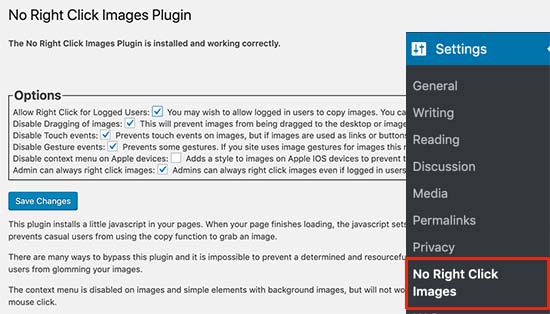
Upon activation, go to Settings » No Right Click Images page to configure plugin settings.

No Right Click Images setings

The default options would work for most users, but you can still review and change them as needed.

The first option allows logged in WordPress users to right-click on images. ‘Disable Dragging of images’ option prevents users from dragging an image from their browser to their computer.

‘Disable Touch events’ options prevents users from using touch devices like mobile phones to download images. It is the no right-click solution for smart phones and tablets.

You can also disable gestures and context menu on Apple devices.

After reviewing the settings, don’t forget to click on the ‘Save changes’ button to store your changes.

You can now log out of WordPress and then visit your website to see the plugin in action.

Adding No Right Click on Image Galleries

The above solution works for all images on your website. However, a lot of users who want to protect their images are photographers and people sharing their work through galleries.

This is where Envira Gallery comes in. It is one of the best WordPress gallery plugin on the market and comes with a protection addon that disables right-click for your image galleries.

First thing you need to do is install and activate the Envira Gallery plugin. For more details, see our step by step guide on how to install a WordPress plugin.

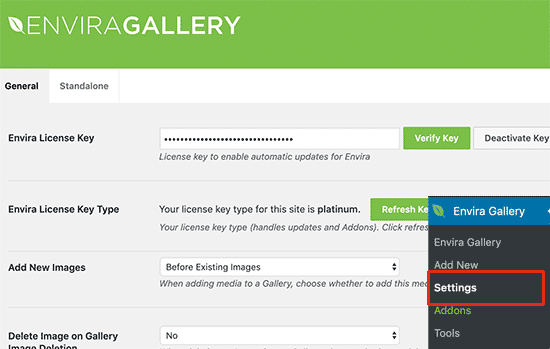
Upon activation, you need to visit Envira Gallery » Settings page to enter your license key. You can find this information under your account on the Envira Gallery website.

Enter Envira Gallery license key

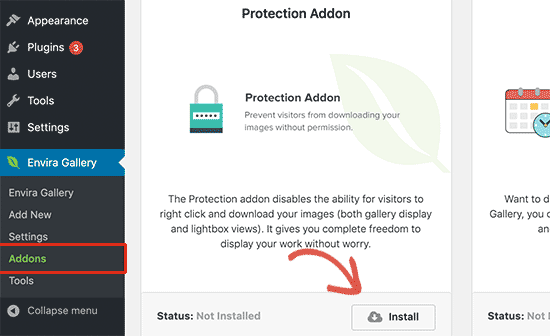
Next, you need to visit Envira Gallery » Addons page. Scroll down to the Protection addon and then click on the Install and Activate button.

Install protection addon

Now you can start creating image galleries using the Envira Gallery plugin.

Let’s create your first image gallery and enable no-right-click protection for images in that photo gallery.

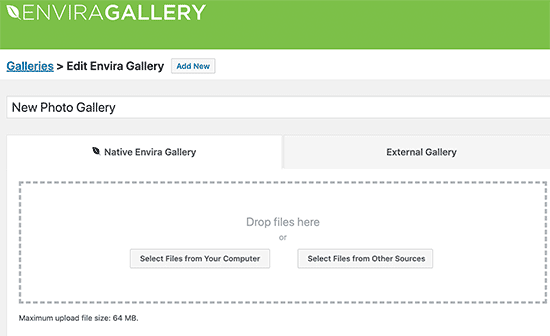
First, you need to visit Envira Gallery » Add New page to create a new gallery. Provide a title for your image gallery and then upload the files you want to add to the gallery.

Creating image gallery

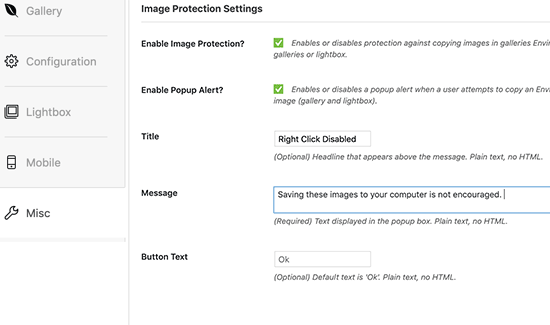
After that, you need to scroll down to the gallery setting section below and click on the Misc tab. From here, go to the image protection settings section.

Image protection settings

You need to check the ‘Enable Image Protection’ checkbox to disable right-click for this particular image gallery. Optionally, you can also show a popup notification when users try to use right-click.

You can now click on the publish button to save your image gallery.

Adding Your Gallery to a WordPress Post or Page

Your image gallery is ready, and you can now add it to any WordPress post or page. Simply edit the post or page where you want to add the gallery and add the Envira Gallery block to the editor.

Add Envira Gallery

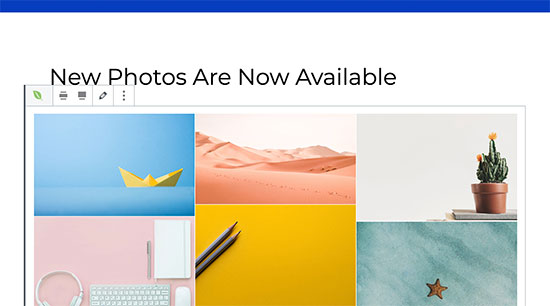
After that, you need to select the image gallery you created earlier from the dropdown menu. Envira Gallery will load your image gallery with a live preview.

Gallery preview in post editor

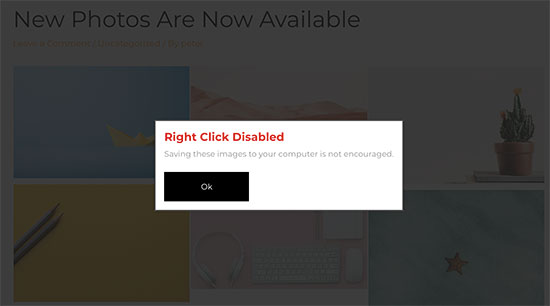
You can now save your post and visit your website to see the no right-click feature in action. If you have enabled the popup feature then this is how it would look when a user tries to right-click on an image in the gallery.

Right click disabled popup in WordPress

Pros and Cons of Disabling Right Click on WordPress Images

The number one reason users want to add no right-click on WordPress images is to prevent website visitors from illegally using those images elsewhere.

Adding no right-click to your images makes it harder for users to download images. It also serves as a reminder to users that the website owner does not want them to download images or reuse them without permission.

However, it does not completely stop users from stealing images from your website.

A user can still download an entire web page which will also include all images on that page.

They can also use the browser’s view source or inspect tool without right-clicking. This will give access to the direct image file which they can download and save on their computer.

On the other hand, adding no right-click on images may also stop several users who may have some genuine reason to save images from your website. Some users may find it annoying and this would affect their user experience on your website.

Alternative Approaches to Discourage Image Theft on Your Website

If you don’t want to affect user experience by adding no-right-click to your WordPress images, then there are a few things you can do to discourage improper use of your work.

1. Add a Copyright Notice Below Your Images

You can add a copyright notice below your images in plain text. This serves as a deterrent without affecting user experience.

Copyright reminder text

You can do this by using Gutenberg blocks. See more details in our Gutenberg tutorial.

2. Give Users a Chance to Ask for Permission

If you want users to be able to reuse your images with your permission and conditions, then you can simply let them know. We recommend using WPForms to create a simple contact form for users to send requests.

3. Add Watermark to Your Images

You can also add watermark to your images. This will affect the quality and aesthetics of your images, but it will definitely discourage users from stealing and reusing those images.

Watermark images to discourage image theft

We hope this article helped you add no right-click on WordPress images. You may also want to see our guide on how to optimize your image SEO, and how to optimize images for web performance (without losing quality).

If you liked this article, then please subscribe to our YouTube Channel for WordPress video tutorials. You can also find us on Twitter and Facebook.

The post How to Add No Right Click on WordPress Images appeared first on WPBeginner.


November 05, 2019 at 07:00PM