Thursday, March 19, 2020

How to Learn WordPress for Free in a Week (or Less)

Are you looking to learn WordPress and build a website? Ease of use is one of the best things about WordPress which makes it the world’s most popular website builder.

Learning WordPress does not require a lot of time or money. You can do it on your own, at your own pace, and then build upon it as you go.

In this article, we’ll show you how to learn WordPress for free in a week (or less). The goal is to help you familiarize yourself with WordPress and become able to build websites on your own.
How to easily learn WordPress for free in one week

Why Learn WordPress?

WordPress is the world’s most popular open-source content management system. That’s a fancy way of saying that it allows you to create any type of website.

WordPress powers more than 36% of all websites on the internet. It generates thousands of job opportunities around the world, and there are millions of websites making money using WordPress.

Apart from economic opportunities, WordPress enables people to share their stories, ideas, build communities and do awesome things.

It is ideal for small businesses to make their online presence, at the same time it is economical enough for bloggers to launch their first blog.

WordPress also powers the most popular eCommerce platform called WooCommerce. It is used by millions of small and big online stores. You can use WordPress to start an online store (without writing any code).

With a ton of plugins and themes, WordPress is easy to extend and allows you to make any kind of website imaginable.

What do I need to learn WordPress?

Learning WordPress is easy as long as you are willing to commit a few hours each day for a week.

You would need some very basic search skills (i.e know how to use search engines like Google), and the ability to follow instructions.

No, you don’t need to know HTML or other programming languages to code a website. It will be helpful to learn them in the future, but you don’t need them to make a website using WordPress as a beginner.

The majority of WordPress users don’t have coding or programming skills, and they have been using WordPress for years.

Similarly, many successful WordPress developers started out just like you, and now they are making websites as full-time web developers.

Now that you are committed to learning WordPress, we want to welcome you to the awesome WordPress and WPBeginner community.

Let’s get started.

Monday: Getting Started with WordPress

Getting started

There are two types of WordPress websites. First, there is WordPress.org also known as self-hosted WordPress, and then there is WordPress.com.

We recommend using self-hosted WordPress.org because it gives you access to all the WordPress features out of the box. For more information, see our comparison of WordPress.com vs WordPress.org.

Now that you have chosen the right platform, the next step is to choose your domain and web hosting .

Your domain is the website address that users will type to visit you (example wpbeginner.com). We have a guide that will help you pick the best domain name for your website.

The next step is to choose web hosting. This is where all your website files will be stored, so users can view your site.

Normally, a domain costs $14.99 per year and web hosting starts from $7.99 per month. This is a lot of money if you are just starting out.

Luckily, Bluehost has agreed to offer WPBeginner users a free domain name and a generous discount on hosting. Basically, you can get started for $2.75 per month.

→ Click Here to Claim This Exclusive Bluehost Offer ←

If you want to look at a Bluehost alternative, then checkout SiteGround or see our guide on how to choose the best WordPress hosting.

Once you have signed up for a domain name and web hosting account, it is time to install WordPress.

WordPress is famous for its easy installation and most hosting providers also offer 1-click WordPress installers. If you need help, then follow our step by step WordPress installation tutorial.

We also have a step by step tutorial on:

For other dedicated tutorials, see our guide on different types of websites you can create with WordPress.

If you’re just wanting to learn and create a test site, you can also install WordPress on your Mac or windows computer. But remember, local websites are not visible to other users on the internet. To make it available to everyone, you’ll need to move WordPress from your computer (local) to a live site.

Once you have installed WordPress, you’ll reach the WordPress dashboard or the admin area. It has a sleek layout with a toolbar at the top and an admin sidebar menu on the left.
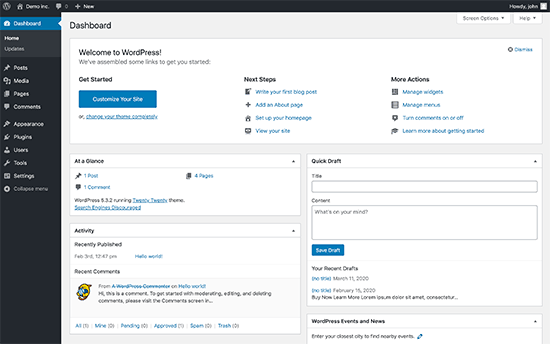
WordPress dashboard

Congrats, you have created a WordPress site. However, your website is currently empty and uses a very basic design and no noticeable features.

In the next few days, you’ll familiarize yourself with the WordPress features and learn how to set it up to work for you.

Tuesday: Learning The WordPress Basics

Learning the WordPress basics

After installing WordPress, it is time to get familiar with the system. You can do so by going through options in the left-hand bar.
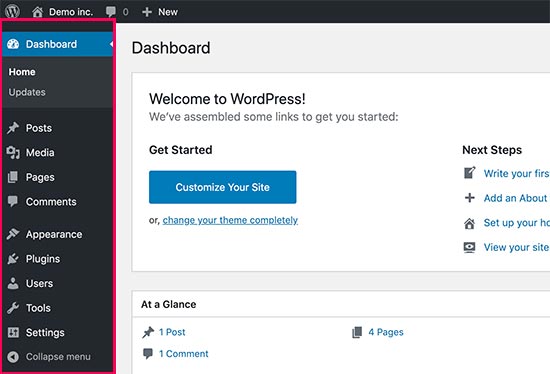
WordPress admin menu items

However, you may still need guidance on how to use each of the items you see in the WordPress dashboard.

The best place to start is our free WordPress video series for beginners. These 34 videos will guide you through the WordPress dashboard, show you how to add images, videos, audio, etc.

We recommend going through these videos as you work on your website. Don’t worry if you can’t watch them all at once. You can always come back and resume where you left off.

As you work on your website, you’ll come across terms that you may not understand. We have a handy WordPress dictionary with a list of commonly used WordPress terminology along with detailed explanation of each term.

Next, you should familiarize yourself with the WordPress block editor. This is where you’ll be spending most of your time when creating content for your website.

While you are at it, let’s go through some key WordPress concepts along the way.

If you still have some time left today, then you should explore our beginners guide section which is full of useful information.

Hopefully by this time, you have a good grasp of your WordPress admin area, and you’re probably eager to play with plugins.

Wednesday: Using WordPress Plugins
WordPress plugins

The real power of WordPress is in the plugins.

Think of plugins as the apps for your WordPress website. They allow you to add new features to your website such as adding contact forms, create a store, etc.

There are more than 55,000+ free plugins available in the official WordPress plugin repository alone. This abundance of plugins can be overwhelming for beginners.

That’s why you should look at our beginner’s guide on how to choose the best WordPress plugin.

Now, as a beginner you may be wondering which WordPress plugins you should install. We have prepared a list of essential WordPress plugins for all types of websites.

We recommend every user to install a WordPress backup plugin, WordPress SEO plugin, and WPForms for your contact form.

Also, check out our WordPress Plugins category where you will find the best WordPress plugins to do anything you want on your WordPress website.

Exploring plugins will keep you busy for most of the day. Take your time to explore plugins that may help you grow your business.

When you come back, the next thing we’ll cover is WordPress themes.

Thursday: Using WordPress Themes
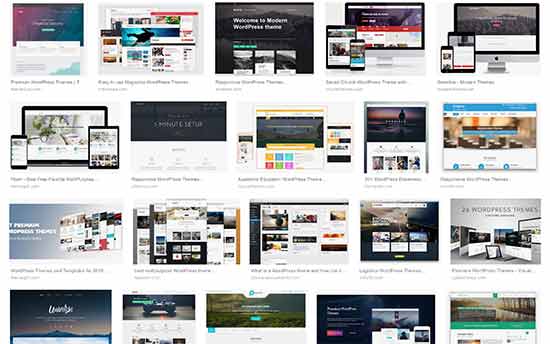
WordPress themes

WordPress themes control the look of your website. Themes are pre-made templates that you can install and customize for your site.

There are thousands of free and premium themes available for WordPress. You can download free themes from the WordPress Themes directory.

For premium themes, you can go to commercial theme shops like StudioPress, Elegant Themes, Themify, etc.

A perfect theme should be a balance of beautiful design and powerful features. Too many features are not always a sign of a good Theme. Check out our guide on choosing the perfect WordPress theme for your website.

If you want to look at specific WordPress themes, then see our WordPress theme showcases:

Once you have found a theme, follow the instructions in our guide on how to install a WordPress theme to properly install it.

After that, refer back to our WordPress videos from Tuesday to see how you can change the background, add header images, add menus, and more in your WordPress theme.

Friday: Customizing WordPress
Customizing WordPress

Each website has different customization needs. Depending on what you want to do with your website, you will come across new questions.

For example how to add a contact form, or create separate page for blog posts.

We recommend browsing through our WordPress Tutorials section which has 500+ step by step tutorials for beginners.

You can also subscribe to WPBeginner’s YouTube Channel for free WordPress video tutorials.

Continue Learning WordPress
Continue learning WordPress

Hopefully, by the end of the week, you have been able to set up your website and familiarize yourself with how WordPress works.

However, WordPress is an incredibly powerful platform, and you’ll keep discovering new things as you work on your website.

The following are a few tips to help you continue learning WordPress.

As you come across a problem, you can search for it using the Search feature on our website.
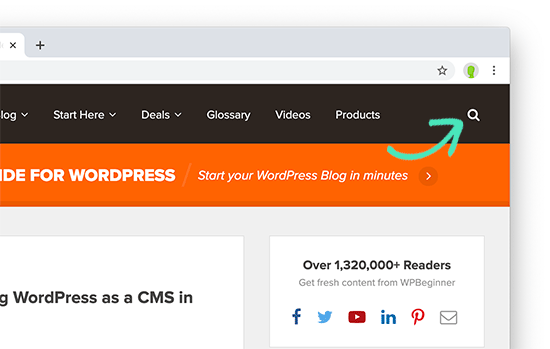
Search WPBeginner

Alternatively, you can simply enter your question in Google and add WPBeginner at the end of your search query to find the most helpful answer.

As the largest WordPress resource site in the world, there is a good chance that you’ll find a step-by-step guide written specifically for beginners.

Can’t find an answer? Join our WPBeginner Engage Facebook group. It is an online community of WPBeginner users with more than 30,000 members. Our team of experts and other industry veterans are actively helping out users there (for free), and you’ll also get advice from other WordPress users as well.

How do I start learning WordPress development?

Many of our beginner users often graduate to intermediate and advanced level users. They ask us for guidance on learning how to code their own solutions.

WordPress is mainly written in the PHP programming language along with HTML, CSS, and JavaScript. We recommend starting with HTML and CSS and then move on to PHP and JavaScript.

Once you have learned a good bit of these languages, you can start learning how to code your own plugins and custom WordPress themes from scratch.

You can learn all these things for free using Google and free resources available. However, there are websites offering professional training courses in different WordPress development areas.

We hope this article helped you learn WordPress in a week. You may also want to see our guide on how to increase your website traffic, how to create an email newsletter, and how to speed up your WordPress site.

If you liked this article, then please subscribe to our YouTube Channel for WordPress video tutorials. You can also find us on Twitter and Google+.

The post How to Learn WordPress for Free in a Week (or Less) appeared first on WPBeginner.


March 19, 2020 at 02:30PM
Wednesday, March 18, 2020

7 Best Platforms to Sell Digital Products (Easily)

Do you want to sell digital products online? Perhaps you’re planning to create ebooks, online courses, software, or something else entirely.

Regardless of which type of digital product you create, you will need an easy to use platform to sell your digital products and deliver them to your customers.

In this article, we will share the best platforms to sell digital products online. As we go through them, we’ll explain their pros and cons to help you choose the best option for your needs.

Best Platforms to Sell Digital Products Online

Why You Need a Platform to Sell Digital Products

If you are selling a single product, then you can probably create a contact form and accept credit card payments using Stripe or PayPal.

However, if you are selling multiple products and need an efficient way for users to access downloads, then you need a proper platform to sell digital products.

These platforms provide you with all the features you’ll need to grow your online business, including:

  • Easy ways to accept payments using multiple payment methods
  • Deliver product downloads to the customers
  • You can provide an account management area for customers
  • You can sell subscriptions based access to downloads
  • You can offer courses, lessons, quizzes, etc.
  • Built-in tools to display and promote products on your website

That being said, let’s take a look at some of the best platforms to sell digital and downloadable products online.

1. MemberPress

The MemberPress websiteMemberPress is the best WordPress membership plugin. It allows you to sell subscriptions and easily control access to different parts of your website.

You can create subscriptions for your digital or downloadable products, so customers can access them from their accounts after purchasing the membership.

Pros

MemberPress integrates with major payment gateways like PayPal, Stripe, and Authorize.net. It also integrates with email marketing services like Constant Contact, ConvertKit, and others.

You can use MemberPress to create as many members only pages or sections on your site. You could deliver your paid content in the form of posts, pages, or downloads that are accessed through a protected “members only” page.

There’s no limit to how many different membership levels you can set up in MemberPress. You can define these however you like.

Most people find MemberPress fairly easy to use. If you get stuck, just check out the step by step instructions in our ultimate guide to creating a WordPress membership site.

MemberPress allows for one-off payments or recurring memberships. You can even set up a free trial membership, create coupon codes to offer discounts, or release drip content to convert more sales.

There are loads of reports available, so you can see which products and membership levels are selling well.

You can use MemberPress with any WordPress theme, but we recommend the following WordPress membership themes since they look beautiful. It can also be easily integrated with other WordPress plugins.

Cons

MemberPress is geared towards sellings subscriptions and memberships and may not be well-suited for businesses that just want to sell one-off downloads.

MemberPress is incredibly powerful and flexible. You may need to read their getting started tutorials to familiarize yourself with all the features.

Pricing

MemberPress costs $149 at the Basic level which is enough for most users who’re just getting started. You can upgrade to their Plus or Pro plan unlock other powerful features.

2. WooCommerce

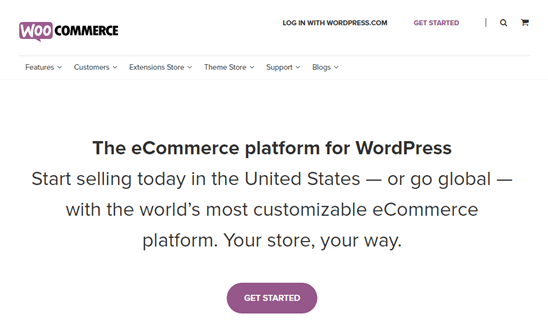
WooCommerce is the best eCommerce platform in the world. It’s a free WordPress plugin, and you can use it to sell both physical and digital products.

Pros

  • WooCommerce itself is free, but you’ll need a WordPress website which requires a domain name and web hosting.
  • You can use it to sell both physical goods as well as digital products.
  • There are lots of WooCommerce plugins and extensions that you can use and many of them are free, or have a free version.
  • There are plenty of beautiful WooCommerce templates that will make your store look professional and boost sales.
  • WooCommerce has dozens of payment gateways available as add-ons including all the top payment services.

Cons

  • WooCommerce can seem a little overwhelming at times as there are so many options.
  • Additional paid plugins or tools can increase your eCommerce website costs. However, you can easily control it by using free options whenever possible.

Pricing

Although WooCommerce itself is free, you might want to pay to add extra functionality. That might mean buying some premium plugins or a premium WooCommerce theme.

We recommend using either Bluehost or SiteGround because they offer the best WooCommerce hosting at affordable rates. After that you can follow our complete WooCommerce tutorial to get started.

3. LearnDash

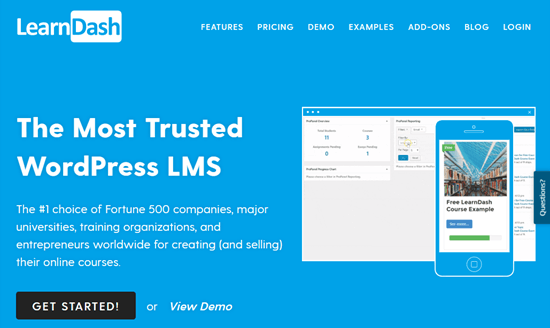
The LearnDash website

LearnDash is the best LMS (Learning Management System) plugin for WordPress plugin. It allows you to easily sell online courses on your website.

Pros

  • LearnDash supports a huge range of pricing models. These include one time sales, subscriptions, memberships, bundles, and more.
  • There’s lots of help available, including video tutorials, community forums, and documentation. There’s also a support team.
  • If you’re running an online course, you’ll find loads of helpful features. These include certificates and badges that you can use as incentives for your students.
  • You can create your own forums, specific to your courses, so that students can interact with one another.
  • There’s a 30-day money-back guarantee, so you can get a refund if you decide that LearnDash isn’t the right option for you.

Cons

  • You can only contact the support team by submitting a ticket. There’s no live chat or phone option.
  • There’s no free version or trial period available.

Pricing

The Basic plan costs $199 at full price. You’ll almost certainly find that it’s on sale for $159 when you visit the site, though.

If you want to use LearnDash on several site, the Plus packet lets you install it on up to 10 sites. That costs $229 full price, though it’s normally on sale for $189.

For more details, see our guide on how to create and sell online courses with LearnDash.

Often users use LearnDash in combination with MemberPress to get the most value.

4. Easy Digital Downloads

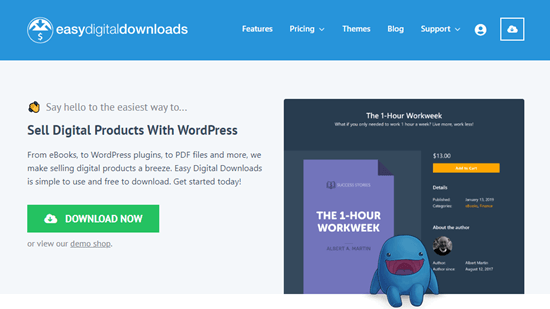
The Easy Digital Downloads website

Easy Digital Downloads does what you might expect from the name. It lets you sell digital downloads from your site. Again, it’s a WordPress plugin, so you’ll need a domain name and web hosting.

Pros

  • You can use Easy Digital Downloads for free, just like you can with WooCommerce. If you want extra features, there are lots of free and paid extensions available.
  • Easy Digital Downloads is specifically designed for selling digital products. If you have no intention of selling physical products, then it could be a great fit for you.
  • There’s plenty of support available. This includes support forums, videos, and tutorials. If you’re a premium user, you can get priority support.
  • You can use the Easy Digital Downloads shortcodes to display your products anywhere you want, such as in a blog post.

Cons

  • There aren’t all that many WordPress themes out there that are designed specifically for use with Easy Digital Downloads.
  • Easy Digital Downloads is free but you may need paid extensions to add extra features. This may increase your costs.

Pricing

The basic version of Easy Digital Downloads is free. If you want more features, then you will need their extensions. Some of them are free and others are paid addons.

You can also opt for one of the pricing plans, which are billed yearly. These give access to email support and various extras through included extensions. They start at $99/year.

5. Restrict Content Pro

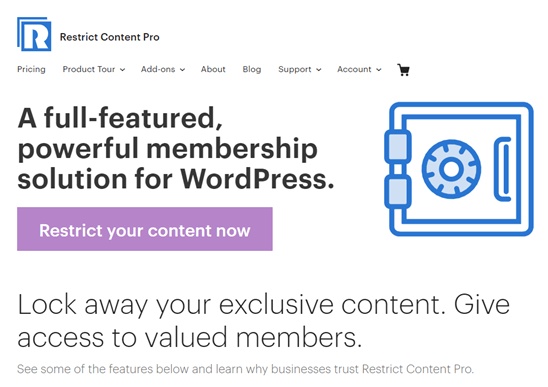
The Restrict Content Pro website

Restrict Content Pro is the paid version of the Restrict Content plugin. It’s a WordPress membership plugin produced by the same team that’s behind Easy Digital Downloads.

Pros

  • Restrict Content Pro is really easy to get started with. Even if you’ve had little experience of WordPress, you should find it fairly straightforward.
  • Restrict Content Pro works seamlessly with Easy Digital Downloads. If you want to use both plugins on your site, it’s easy to do so.
  • It comes with a lot of built-in integrations, like Stripe, PayPal, MailChimp, WooCommerce, and more.
  • You can create as many different membership levels as you want, including free and trial memberships.
  • Your customers can move between subscription levels and only pay the difference. This happens automatically and could save you a lot of admin time.
  • You can easily view reports on your earnings, membership numbers, and more.
  • There’s an “Unlimited” plan available which includes lifetime updates and supports for a single one-off fee.

Cons

  • The free version of the plugin doesn’t handle payments. You’ll need to upgrade to Pro if you want people to pay to register.
  • Some of the most useful addons aren’t included in the Personal or Plus plans. These include the ability to drip content, which most membership plugins include as a basic feature.
  • There’s no phone or live chat support, even at the higher pricing tiers. You have to submit a support ticket instead.
  • Although there’s a 30 day refund period, you can only get a refund if you can explain why the plugin won’t work for you.

Pricing

There’s a free version of the plugin available, called Restrict Content. The Restrict Content Pro plugin costs from $99/year, which comes with 13 free add-ons.

6. Shopify

The Shopify website

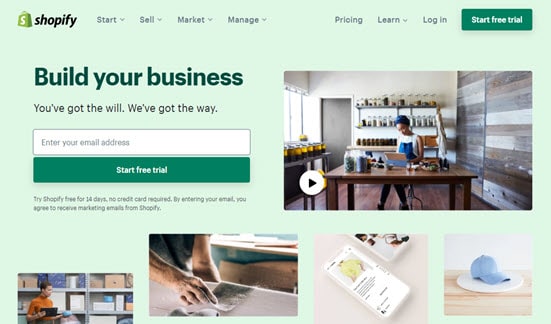
Shopify is an all in one platform for eCommerce. This means it handles everything for you such as your site hosting, updates, and security. You just pay a single monthly fee.

Pros

  • Shopify is really easy to get started with. You don’t need to buy hosting or even a domain name. You just sign up for an account with Shopify and start creating your store.
  • You can sell both physical and digital products using Shopify. This could be useful if you might want to offer physical products in the future.
  • There are loads of apps available for Shopify. These add functionality to your store. Most of these will cost you money, but some are free integrations with other software that you might be paying for, such as OptinMonster.
  • You can pick from lots of different Shopify themes (templates) for your site, or even buy a premium theme from the Shopify themes store.
  • There’s 24/7 support available through live chat, phone, email, and Twitter. There’s also lots of documentation, plus video tutorials and support forums.

Cons

  • You can’t easily integrate Shopify with WordPress, so it’s not a good option if you want to sell directly from your existing website.
  • Shopify has a built-in payment system called Shopify Payments. If you want to use third-party payment gateways, like PayPal or Amazon Payments, Shopify charges an extra 2% fee on these transactions.

Pricing

Shopify costs $29/month for the basic plan. This gives you access to the majority of features that you’re likely to want, apart from reports and gift cards. Those are available on the next tier up, at $79/month.

7. Teachable

The Teachable website

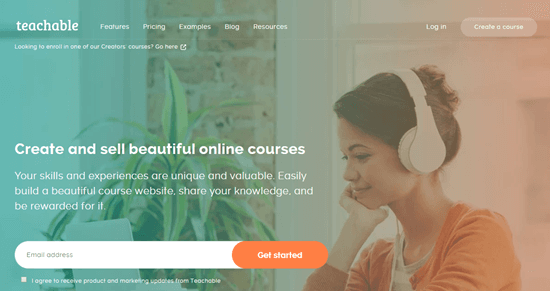
Teachable is a platform where you can create your own online courses. It hosts your course for you, so you don’t need a website in order to use it.

Pros

  • Teachable is easy to get started with. It has a straightforward dashboard to guide you through the process.
  • There’s a generous free plan available, so you can get started without paying anything. This plan lets you have unlimited courses and students, and you can have a discussion forum and basic quizzes too.
  • It’s easy to arrange and organize your content in Teachable using the drag and drop interface.
  • You can upload your own logo, images, text, colors, and so on to customize how your Teachable sales pages looks.
  • Teachable can handle lots of different file types. It does a particularly good job of dealing with videos, which should look great whatever device your student is using.
  • There are great analytics that can show you how your students are doing. You can even track individual students’ progress.
  • You can communicate with students directly from your Teachable platform.

Cons

  • If you want to customize your course homepage using the Power Editor, you’ll need to understand HTML and CSS code.
  • Teachable is designed for courses. It’s not really going to work for you if you want to sell something like an ebook or software.

Pricing

Teachable’s free plan doesn’t cost anything. However, you will pay $1 plus 10% for every paid course that you sell. That means that if you have a course costing $200, you’ll pay Teachable $21 on each sale.

The cheapest plan is $29/month. If you’re on this plan, you’ll also be charged an additional 5% on each sale. To avoid paying any commission at all, you’ll need to be on the Professional Plan for $79/month.

Choosing the Best Platform for Your Needs

The best platform to sell digital products depends entirely on your needs.

If you want to sell subscription-based digital products, premium content, or pay-per-view website, then MemberPress is the best option.

If your products include ebooks, music, or software, then Easy Digital Downloads might well be all you need.

If you want to sell an online course, pick a platform like LearnDash or Teachable. These are specifically designed for online course creators, and it’s easy to use them to create a professional looking course.

Finally, if you’re also selling physical products, or might want to do so in the future, go with WooCommerce or Shopify. Both of these options make it easy to sell both digital and physical goods.

We hope this article has helped you compare the best platforms to sell digital products. You may also want to see our guide on the best WordPress plugins and our proven tips to grow your website traffic.

If you liked this article, then please subscribe to our YouTube Channel for WordPress video tutorials. You can also find us on Twitter and Facebook.

The post 7 Best Platforms to Sell Digital Products (Easily) appeared first on WPBeginner.


March 18, 2020 at 07:02PM

Tuesday, March 17, 2020

Beginners Guide: How to Install a WordPress Theme

Are you looking to install a WordPress theme?

There are thousands of WordPress themes available (both free and paid). As a beginner, you may want to try out a few of them on your site until you find the right one.

In this beginner’s guide, we’ll share detailed step by step instructions on how to install a WordPress theme. We’ll cover three different ways to install a WordPress theme, so you can choose the method that works best for you.

Installing a WordPress theme step by step

Before You Install a WordPress Theme

Installing a WordPress theme is easy but keep in mind that if you activate a new theme, then it will change how your website looks and functions.

If you’re switching from an existing theme, then you may want to look at our checklist of things you need to do before changing WordPress themes.

If you are installing a WordPress theme on a new site, then you are good to go.

Bonus Tip: See our list of the best and most popular WordPress themes.

Video Tutorial

If you don’t like the video or need more instructions, then continue reading.

Install a Theme using WordPress Admin Theme Search

If you’re looking to install a free WordPress theme from the WordPress.org themes directory, then the easiest way is by using the built-in theme search functionality.

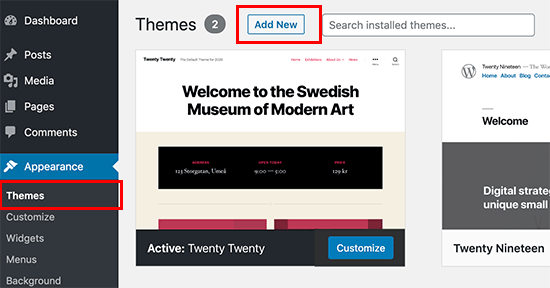
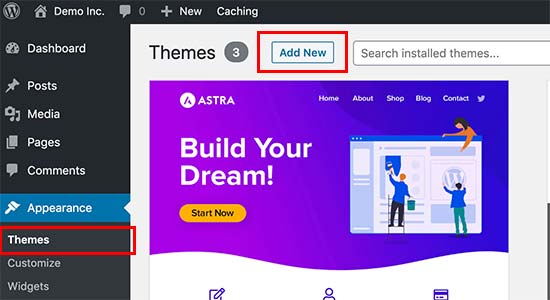
The first thing you need to do is log in to your WordPress admin area. Next, go to the Appearance » Themes page and click on the Add New button.

Add new theme in WordPress admin area

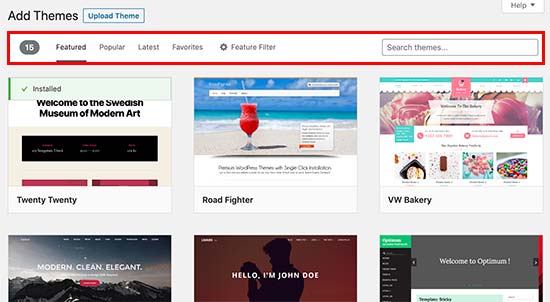
On the next screen, you will have the ability to select from: Featured WordPress themes, Popular WordPress themes, Latest WordPress themes, search for a specific theme, or search for themes with specific features.

Add new theme toolbar and search

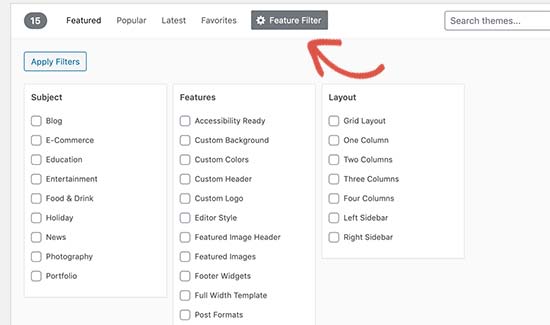
Clicking on the ‘Feature Filter’ button will allow you to sort themes based on features. For instance, you can sort themes by subject, specific features, and layout.

Filter theme results by feature

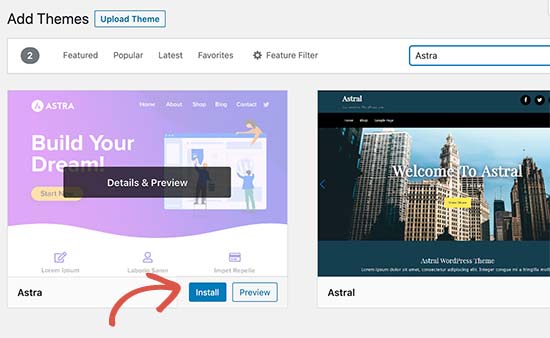
Based on your search, you will see a list of themes that met your criteria. In our case, we searched for the popular Astra theme.

When you see the theme that you want to install, simply bring your mouse on top of the image. This will reveal the install button, preview button, and details button.

Go ahead and click on the install button.

Install WordPress theme

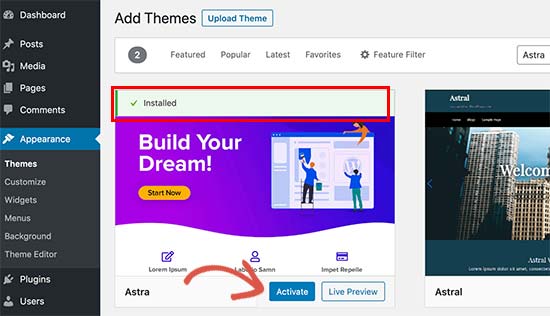
WordPress will now install your theme and show you a success message along with ‘Activate’ or ‘Live preview’ buttons.

Activate theme

Click on the activate button, and you’ve successfully installed and activated your WordPress theme.

Depending on the theme, it may add additional settings options that you may need to configure.

For instance, your theme may ask you to install the recommended plugins, download demo data, or review settings.

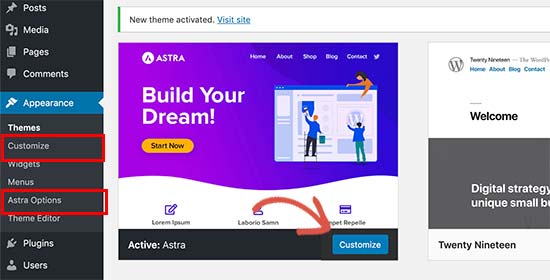
You can follow the on-screen instructions, or click on the customize button to start setting up your theme.

Customizing themes

Install a Theme by using the Upload Method from WordPress Admin

The first method that we covered only allows you to install free themes that are available in the WordPress.org theme’s directory.

What if you want to install a premium WordPress theme from companies like StudioPress, Elegant Themes, Themify, etc.

Or what if you want to install a custom theme? Well, in this case, you would need to install the theme using the upload method from your WordPress admin.

Start by downloading the .zip file of the theme that you purchased from a marketplace or a commercial theme shop.

Next, go to the Appearance » Themes page in WordPress admin area and click on the Add New button at the top.

Add new theme button

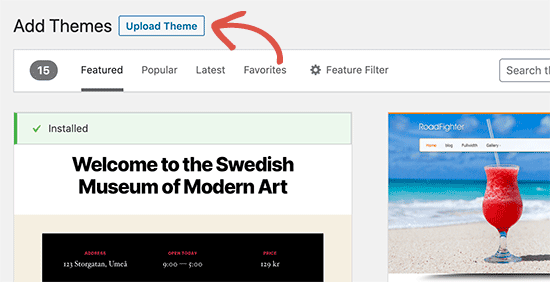
This will take you to the add new theme page showing featured free themes. Since you already have the theme you want to install, go ahead and click on the ‘Upload Theme’ button at the top.

Upload theme button

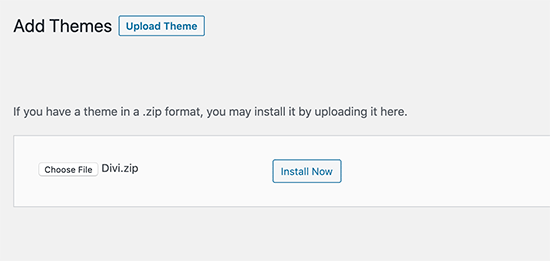
You will be prompted to choose the zip file that you downloaded earlier. Select the file and click Install Now.

Upload and install theme

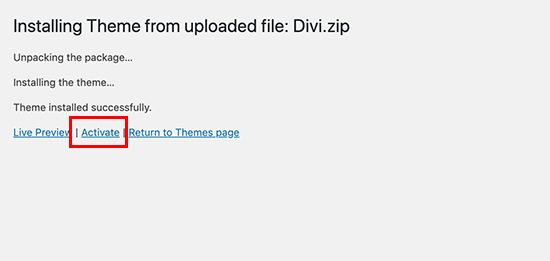
Once your theme is installed, you will see a success message along with the link to activate and preview the theme.

Theme installed and ready to be activated

Click on the ‘Activate’ link, and you’ve successfully installed and activated your WordPress theme.

Depending on the theme, it may add additional settings options that you may need to configure either through the theme customizer or through a separate options panel.

Note: The theme upload functionality is only available for self-hosted WordPress.org users. If you’re using WordPress.com, then you will not see this option because it limits you.

In order to use custom theme upload feature, you would need to use self-hosted WordPress.org (See this article that explains the difference between Self Hosted WordPress.org vs WordPress.com).

If you want to switch from WordPress.com to WordPress.org, then read our tutorial on how to properly move from WordPress.com to WordPress.org.

Installing a WordPress Theme using FTP

If you’re feeling adventurous and want to take your skills to the next level, then you can learn about installing WordPress themes using FTP.

Remember, this is not for true beginners because it is a little bit more advanced.

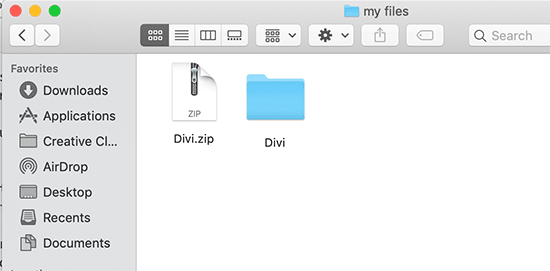
First, you need to download the theme zip file to your computer. After that, you need to unzip the file.

This will create a new folder with the theme’s name on your computer. We downloaded the popular Divi premium theme.

Extracted theme files

Now that you have the theme files, you are ready to upload them to your website.

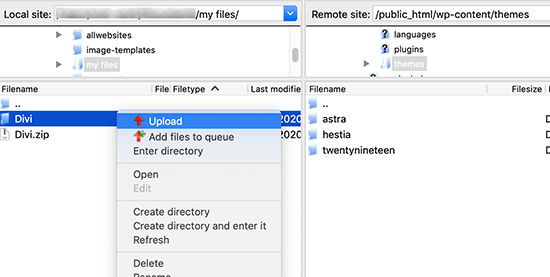
To do that, you’ll need to connect to your website / WordPress hosting account using an FTP client. If you need help, then see our guide on how to use FTP to upload WordPress files.

Once connected, you need to go to /wp-content/themes/ folder. Inside, you’ll see folders for all themes currently installed on your website.

Upload theme files via FTP

Select your unzipped theme folder from your computer and then upload it to your website.

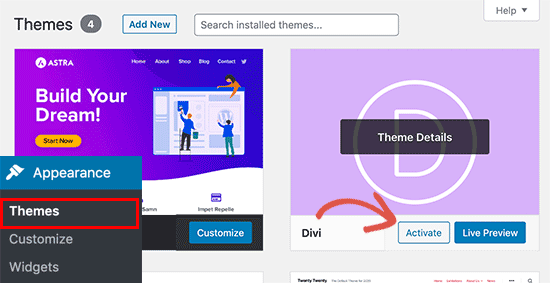
Once you have uploaded the theme, you would need to go to your admin area and click on Appearance » Themes.

You should see the theme that you uploaded listed there. Simply bring your mouse on top of that theme and click on the activate button.

Activate uploaded theme

FAQs About Installing WordPress Themes

The following are some of the most commonly asked questions about installing WordPress themes.

1. How many themes can I use in WordPress?

You can only use one theme at a time. However, you can install as many themes as you like. Not all installed themes on your WordPress website are active.

As soon as you activate a WordPress theme, it automatically deactivates your previous active theme and makes the new theme your active theme.

2. What is a child theme in WordPress?

A child theme in WordPress is a sub-theme that inherits all the functionality, features, and style of its parent theme. You will need to install both parent and child themes on your website and activate the child theme.

For more details, see our guide on how to create a child theme in WordPress and how to install a child theme in WordPress.

3. What is a WordPress theme framework?

Theme frameworks are highly optimized WordPress themes designed to be used as parent theme.

Intended for advanced users and developers, these theme frameworks contain several code and speed optimizations that help other developers quickly build upon them.

Genesis by StudioPress is the best example of a WordPress theme framework. For more information, see our article on WordPress theme frameworks.

4. Premium vs Free themes – Which one I should use?

If you are just starting out on a limited budget, then we recommend getting started with a flexible free theme. See our pick of the best free WordPress themes for blogs and best free themes for business websites.

If you can spend a little more, then choose a premium theme. These themes come with priority support which comes in handy particularly for beginners.

For more on this topic, see our guide on free vs premium WordPress themes.

5. How do I choose the best theme for my website?

There are so many WordPress themes out there and most of them are designed by professionals so they look really great.

This makes it a bit confusing for beginners to choose the perfect theme for their website.

We recommend keeping it simple. Choose a minimalist design that comes close to what you have in your mind. Make sure that the theme looks great on mobile and run a website speed test on the demo site.

See our beginner’s guide on how to choose the perfect WordPress theme for your website.

6. Can I use the same theme I have seen on another WordPress site?

If it is not a custom WordPress theme, then you can find and use the same theme on your own website. See our guide on how to find out which WordPress theme a site is using.

We hope this step by step guide helped you install a WordPress theme on your site. You may also want to see our guide on how to make money online from your new WordPress website, and the must have / best WordPress plugins.

If you liked this article, then please subscribe to our YouTube Channel for WordPress video tutorials. You can also catch us on Twitter and Google+.

The post Beginners Guide: How to Install a WordPress Theme appeared first on WPBeginner.


March 17, 2020 at 03:00PM