Monday, April 13, 2020

How to Buy a Domain Name That is Taken (9 Pro Tips)

We often hear from readers who want to buy a domain name that’s already been taken.

If you’re in that position, then you might be wondering how to go about getting hold of a domain name that someone already owns.

The easiest solution would be to find another suitable domain name. However, sometimes this may not be the best option.

In this article, we’re going to share our expert tips on how to buy a taken domain and give you some insider tips on what to watch out for. We will also cover few proven strategies that you can use if your domain isn’t available.

Tips on buying a taken domain name

Note: Unlike other guides on the internet, this resource is based on our actual collective experience of buying premium domains. We have spent anywhere from few hundred to few million dollars in buying premium domains and established website businesses.

The Basics of Buying a Domain Name That’s Already Taken

All websites need a domain name. It is your website’s address on the internet. See our beginner’s guide on how domain names work if you’re not 100% sure what a domain name actually is.

You can register a new domain name for around $10 – $15 from any of the top domain registrars. Alternatively, you can even get a free domain name when you sign up with hosting companies like Bluehost, Dreamhost, etc.

But what if the domain name you want is already taken?

In that case, you have two options: come up with a different name or buy the one you really want from it’s current owner.

Buying a taken domain name from someone who’s already registered it could be a great move for your business.

However, it’s important to beware of risks and scams, so you don’t waste time or money. That’s why we have put together these tips on how to buy a taken domain as safely as possible.

What to Consider Before Buying a Domain Name

One key question to ask yourself is whether you want to purchase a domain name alone or an established website.

Buying a website, if it’s one that has a consistent track record of making money, can be a great shortcut. It lets you get a money-making business straight away rather than having to build one from scratch.

However, it’s going to be way more expensive to buy a website than just a domain name. You’ll also have more risks and legal liabilities to consider.

How to Actually Buy a Taken Domain Name

There are two main routes to buying domain names that are already taken:

  • Privately approaching the domain name’s owner and agreeing on the sale
  • Look for the name in domain marketplaces.

The first method avoids involving a third-party into the sale, and you may be able to persuade the owner towards more favorable pricing.

If the domain name already has a website with a contact form, then you can use that to reach out to the site owner.

Alternatively, you can search for it using the Domain WHOIS tool. You may be able to get the contact details of the owner from the domain details there.

The second method is to look for the name using online domain marketplaces. This is where many domain owners go to sell their domain names.

We recommend using Domain.com. It is one of the best places to register a domain name or buy a domain name for sale.

Simply search for the domain name you are looking for to see if it is available for sale.
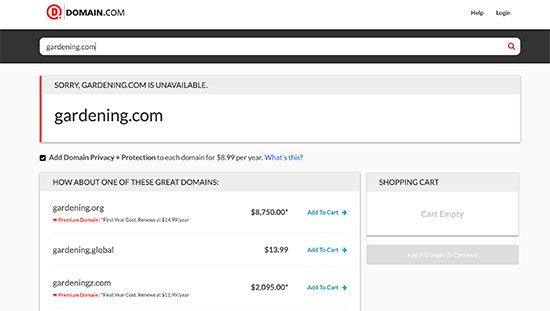
Domain.com search

Domain names that are already taken may be highlighted as a premium domain name with a higher price. If you find the domain name listed there, then you can add it to the cart and proceed to payment.

You can try multiple domain marketplaces like Sedo, Flippa, etc to see if the domain is listed for sale there.

If the domain name is not listed anywhere, then it is probably not available for sale. You can still try the first method of approaching the owner with your offer.

That being said, let’s take a look at tips on making sure that you buy your domain name safely.

Tip 1. Avoid Using a Different Extension Instead

Domain name extensions

If you find that your domain name is taken when using a .com, then you might be tempted to use a different domain extension like .net or .org.

However, this can cause problems as people may forget your domain name and type in .com or .org.

You may even face legal issues if the .com owner argues that you’re trying to infringe on their brand name. This is particularly the case if they’ve registered it as a trademark.

We cover more on why you need a .com domain in our article on how to choose the best domain name.

Tip 2. Check the Domain Name isn’t a Registered Trademark
Trademark and copyright

If the domain name is a registered trademark of an existing business, then you could end up having to take your website offline completely in the future.

It’s well worth doing a quick search of the US trademark database to check whether your domain name is already being used by another company. You may also want to check local databases too.

Even a domain name that uses a trademark within it could be a problem. For instance, you can’t use the word “WordPress” in your domain name.

Tip 3. Don’t Get Too Emotionally Attached

Starting a new online business idea is exciting. Since your domain name plays a crucial role, it’s easy to get emotionally attached to a specific name.

However you need to be smart and rational about all financial investment decisions, including this one.

We recommend keeping your options open and look around for multiple domain names, or at least give them serious considerations.

This will help you in negotiation, so you can get the best deal without overpaying for your domain name.

Remember, the cost of premium domain names can vary from few hundred dollars to a few hundred thousand dollars.

Having options make sure that you don’t end up paying a huge sum of money for a domain name that’s really not any better than something else that was 1/10th of the price.

Tip 4. Check if a Website Has Ever Been Built There

Viewing the website history of a domain name using the WayBack machine

Make sure that you check website history using the Wayback Machine. It is possible that the domain name may have been used by someone else.

It is alright if the domain name has been used before, but you want to make sure that it wasn’t used for malicious, spammy, or illegal activities.

This may harm your business’ reputation and may even cause legal issues in the future. If there’s a Google penalty on the domain, then that could take a lot of work and resources to wipe out.

WayBack Machine is also a smart way of finding domain owner information as well.

Tip 5. Figure Out What the Domain is Worth

Domain valuation

Domain name pricing is tricky. If you’re new to buying domains, then you might wonder whether the price you’re being quoted is a bargain, a rip-off, or something in between.

Well, the truth is that there is no standard regulation for premium domain name pricing. Sellers independently decide the price, and it’s up to you as a buyer to decide if it’s worth the investment.

Premium domain names can range from few hundred dollars to a few hundred thousand dollars. Some rare premium domain names even go into the million dollar range.

If you’re new, then you can use a tool like EstiBot to get a general idea of what the domain may be worth.

Disclaimer: Automatic domain name evaluations aren’t necessarily very accurate, but they do show similar domain sales data which is helpful.

If the domain is priced too high (and it often will be), then you’ll need to be prepared to haggle. Don’t start by offering the maximum you’d be willing to consider. Instead, start at a lower price with the expectation that you’ll likely end up meeting half-way.

Keep in mind that there’s a limit to how low the seller will go. Don’t expect someone to accept $500 if they originally asked for $20,000.

However just because someone asked for $20,000 doesn’t mean you need to meet them half way either. We’ve often secured $20k domain deals in the $3k – $6k range.

Tip 6. Know Exactly What You’re Buying

Evaluate details

Make sure you know exactly what you’re going to be getting. Is it just the domain name you’re buying? Or are you buying a website too? If you’re buying the website, then does this include all the content?

Established websites may well use lots of different plugins and tools that the owner has licenses for. It’s unlikely that these licenses will be transferred over to you along with the sale, so you’ll need to be prepared to purchase them for yourself.

You’ll also want to be clear on whether you’re receiving assets like the website’s email list data.

If the domain name or website is a large purchase, then you should definitely have a lawyer draw up a contract for you. Consult someone who’s an expert in IP (Intellectual Property) law.

Even if you’re making a small purchase, be sure to get crucial details in writing at the very least.

Bonus: ask if the owner has access to existing social media accounts for the domain name, so you can get that as part of the deal.

Tip 7. Make Sure You’re Buying From the Domain’s Owner

Scam

Imagine this. You hand over your money for a domain name, only to find that the domain has been stolen. You never see your money again, and you’re not the legal owner of the domain either.

It’s a nightmare scenario, but unfortunately, it can happen. A good initial check is to use a tool such as DNS Trails to see whether there have been any recent changes to the DNS records. If you see something odd, then ask for an explanation.

If all your contact with the domain name owner has been through email, it’s well worth getting a phone number, so you actually talk to them. Email accounts can be hacked and email addresses can be faked.

Tip 8. Use Escrow to Transfer the Money

Escrow

You might be nervous about buying a domain name, particularly for a significant sum. What if the seller takes your money and doesn’t hand over the domain name?

The best solution is to use a site like Escrow.com. You give your money to the site, and they hold it securely until you confirm you’ve received the domain name. At that point, they hand the money to the seller.

Escrow.com has been used for the purchase of some hugely famous domain names, including Twitter.com, Gmail.com, WordPress.com and more. Note that you will need to pay a fee to Escrow.com.

Important: Don’t take a shortcut here and try to save on Escrow fees. We always use Escrow for domain purchases unless the domain owner is willing to transfer the domain to us before receiving payments. Trust us, it’s not worth the risk!

Tip 9. Consider Backordering a Domain You Want

Every day, thousands of domain names get expired and are not renewed or registered. A lot of businesses fail to take off or the domain owners lose interest.

In some cases, the owner might simply forget to re-register the domain.

You don’t have to watch the domain name to see when it’s about to expire. Instead, there are plenty of services that will monitor the domain name on your behalf. They’ll automatically try to register it the moment it’s available.

You can use GoDaddy for domain backorders. There are plenty of other sites that offer a similar service too.

The problem with back-ordering is that it may not work at all. The domain owner may renew their domain name, or someone else may have placed a backorder before you which will be given priority.

Final Thoughts + Alternative Strategies

Buying a domain name that’s already taken is not easy, and the process can take anywhere from few days to a few months. And if the owner doesn’t want to sell, then it can even take years to convince them.

This is why we always recommend having few options when you’re searching for domains. You can use a domain name generator like Nameboy to come up with ideas.

Here are some clever tips that can help you come up with alternatives:

  • Add a verb to your keyword – for example: getpocket.com, getcloudapp.com, and tryinteract.com
  • Extend your brand with a keyword – for example: invisionapp.com, gogoair.com, etc. Remember Tesla didn’t own tesla.com, so they started with TeslaMotors.com. Buffer didn’t own buffer.com, so they used bufferapp.com in the beginning.
  • Use abbreviations – for example: wpbeginner.com, wpforms.com, etc.
  • Use a catch phrase or adjective – for example: optinmonster.com, trustpulse.com, monsterinsights.com, etc.

We hope this article helped you learn how to buy a domain name that’s taken. You may also want to see our guide on proven ways to make money online, and our comparison of the best website builder platforms.

If you liked this article, then please subscribe to our YouTube Channel for WordPress video tutorials. You can also find us on Twitter and Facebook.

The post How to Buy a Domain Name That is Taken (9 Pro Tips) appeared first on WPBeginner.


April 13, 2020 at 07:01PM

Friday, April 10, 2020

21 Best WordPress Themes for Fitness Blogs (2020)

Are you looking for the best WordPress themes for fitness blogs or gym websites?

As a fitness website owner, you may be looking for a theme with a specific look and features to help you promote your training, services, and products.

In this article, we will share some of the best WordPress themes for fitness blogs that you can use.

Best WordPress Themes for Fitness Blogs

Starting Your Fitness Website with WordPress

WordPress is the best website builder in the market. And, over 35% of websites on the internet are built on WordPress.

There are two types of WordPress sites and choosing the right one is important for your success. See our comparison of WordPress.org vs WordPress.com for more details.

A self-hosted WordPress.org website gives you access to all features and complete control of your website.

To start a website, you’ll need a domain name and a WordPress hosting account.

We recommend using Bluehost. They are the most popular web hosting company, and an official WordPress hosting partner.

For WPBeginner users, they are giving a free domain name, free SSL, and a 60% discount on web hosting.

After signing up for the hosting, the next step is to install WordPress. See our guide on how to start a blog for step by step instructions.

That being said, let’s take a look at some of the best WordPress themes for fitness blogs that you can use.

1. Astra

Astra Fitness

Astra is a popular WordPress multipurpose theme. It is fast and lightweight, which makes it perfect for any kind of website.

The theme comes with dozens of starter sites, a 1-click demo content importer, and unlimited custom WordPress options to set up your fitness website quickly.

2. Divi

Divi Fitness

Divi is a powerful WordPress theme and an ultimate page builder plugin. It comes with multiple built-in modules and elements that let you set up your website quickly.

It is a 1-stop solution with 100s of layout packs for different business niches. You can find a perfect fitness website layout, including the homepage, contact page, and landing pages.

Their drag and drop page builder for WordPress is consistently ranked amongst the top in the market.

3. Ultra

Ultra Fitness

Ultra is a highly flexible WordPress theme. It comes with ready-made website templates, including a fitness layout.

It ships with Themify drag and drop builder, which makes it even easier to create custom landing pages for your website. Ultra includes multiple addons to add pricing tables, countdown timers, Google Maps, and more to your site.

4. OceanWP

OceanWP Fitness

OceanWP is a free WordPress multipurpose theme designed for any type of website. It features a 1-click demo content importer addon and multiple starter sites to launch your fitness site.

The theme has built-in SEO optimization, which means you can rank your website in the search engines and increase your traffic. It also lets you set up an online fitness training program easily.

5. Hestia Pro

Hestia Fitness

Hestia Pro is a multipurpose theme for WordPress websites. It has a fully customizable homepage layout with custom header that supports video and image backgrounds.

Other notable features include call-to-action buttons, custom logo, eye-catching colors, and useful homepage sections. It is easy to set up and works with all top WordPress page builders.

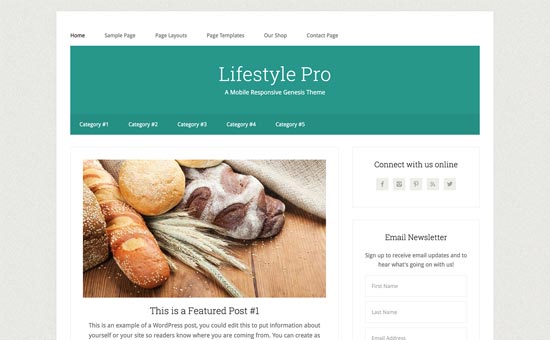
6. Lifestyle Pro

Lifestyle Pro

Lifestyle Pro is a magazine-style WordPress theme. It is built on top of the Genesis Theme Framework, which gives it a solid foundation to create a faster website.

The theme has a widgetized homepage to add your content and images quickly. It supports WooCommerce to sell fitness products and online training services.

StudioPress is now part of WP Engine, the most popular managed WordPress hosting company. You can get this theme and all 35+ other StudioPress themes when you sign up for WP Engine hosting to build your website.

Bonus: WPBeginner users also get an additional 20% OFF. Get started with WP Engine today!

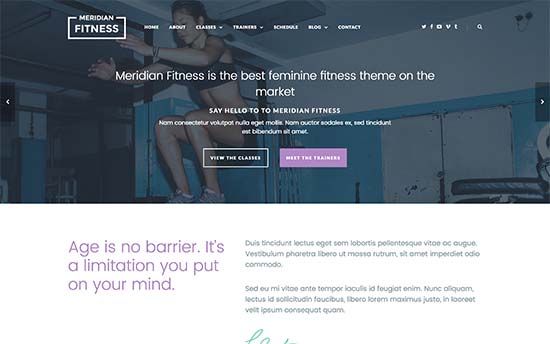
7. Meridian Fitness

Meridian Fitness

Meridian Fitness is a beautifully designed WordPress theme for health and fitness blogs, gyms, yoga clubs, and crossfit websites. It has easy-to-use sections for classes with schedules and trainers.

Inside you will also find several custom widgets, color schemes, templates for online schedules, contact form, and more. It is easy to set up with the help of a live theme customizer.

8. Sportify

Sportify

If you are looking for a WordPress theme packed with features for fitness blogs, gyms, and sports websites, then check out Sportify. It has built-in homepage sections to easily add services, testimonials, team members, calendar, and more.

It comes with shortcodes to display call-to-action buttons, pricing tables, and tabbed content. It also ships with a powerful featured content slider plugin.

9. The WP Fitness

The WP Fitness

The WP Fitness is a perfect WordPress fitness theme. It includes a full-width custom header on top where you can add an image slider, a navigation menu, custom logo, and a call-to-action button.

The homepage has a grid layout that displays your featured posts beautifully. It is easy to set up, and all theme options are available in the WordPress live customizer.

10. Vigour

Vigour

Vigour is a modern WordPress theme with a beautiful design for fitness websites, gyms, sports, yoga clubs, and health-related businesses. It has stylish homepage sections to add your services, image sliders, and image galleries.

It ships with a companion plugin to manage your fitness classes, schedules, and events. It also lets you embed videos of your training sessions on the homepage.

11. Energy

Energy

Energy is an excellent WordPress theme built for fitness websites, gyms, yoga studios, and weight loss programs. It features a full-width slider on the homepage followed by your most important content.

It includes 2 header styles, page templates, photo gallery, testimonials section, and a separate blog page. It lets you choose your colors and offers a theme options panel to help you set up your website easily.

12. Modules

Modules

If you need a flexible design for your website, then check out the Modules theme. It is packed with several ready-made websites that you can import in 1-click and add your content.

It is easy to create custom page layouts on Modules. It also comes with ready-made modules that you can drag and drop on any page to create a custom template for your fitness website.

13. The Styler

The Styler

If you run a fitness blog for women, then take a look at The Styler. It is an elegantly designed theme with beautiful colors, crisp typography, and an eye-catching layout.

It includes custom widgets for social media networks, business hours, and more. You can choose a different combination of layouts using content widgets.

14. Inspiro

Inspiro

Inspiro is a stunning WordPress multipurpose theme. It comes with fullscreen video background, video gallery, and lightbox popup to watch videos in night mode.

It features unique homepage sections and comes with a drag and drop page builder for your custom page layouts. It is easy to set up and includes a theme settings panel for advanced options.

15. Advance Fitness Gym

Advance Fitness Gym

Advance Fitness Gym is a free WordPress theme perfect for fitness bloggers, crossfit, and sports blogs. It comes with a welcome area on the homepage that you can use to introduce yourself to users.

It has a featured content slider, carousel slider, and services section. The theme also includes social media icons in the header section.

16. Spencer

Spencer

Spencer is a beautiful WordPress theme for fitness businesses and lifestyle bloggers. It features a widgetized homepage layout with unlimited colors, sticky navigation menu, call-to-action button, and a newsletter signup form.

You can choose from different column settings, effects, sidebars, and customize everything to match your style. It also supports the Elementor page builder plugin.

17. Grandstand

Grandstand

If you are looking for a traditional WordPress fitness blog theme, then you should check out Grandstand. It has a 2-column layout with your blog posts in the left column and sidebar in the right column.

It comes with a navigation menu on the top next to social media profiles and a fullscreen search overlay. It offers dedicated spots to display ads and a custom ads template to attract new advertisers.

18. Neve

Neve

Neve is an elegant WordPress multipurpose theme. It ships with dozens of ready-made sites, including a fully functional fitness website template.

You get a fullscreen layout with a custom header background image, unlimited color choices, CTAs, and more. It also features homepage sections for your classes, schedules, and services.

19. Salon

Salon

Salon is a health and fitness theme for WordPress. It features a unique and modern layout which is easy to set up using the custom content widgets.

It includes homepage sections to add your services, staff profiles, photo galleries, and videos. You can choose from different color schemes or switch colors for each page easily.

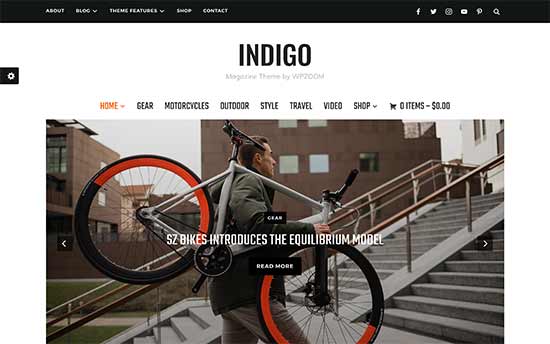
20. Indigo

Indigo

Want a magazine-style theme for your fitness blog? Indigo is a fantastic WordPress multipurpose theme. It has a minimalist approach with a spacious white layout that makes your content highly visible to users.

It includes a sticky navigation menu, featured content slider, 3-column widget area, categories, and more. It has a custom theme options panel, which makes it easy to set up.

21. Wellness Pro

Wellness Pro

Wellness Pro is a classic WordPress fitness theme for lifestyle bloggers, yoga clubs, and health-related businesses. It has a full-width custom header where you can display a welcome note and a call-to-action button.

It offers 12 different widgets for the homepage and landing pages. The theme is fully translation-ready to create a multilingual website easily.

We hope this article helped you find the best WordPress themes for fitness blogs. You may also want to check out our article on how to start an online store and best WordPress plugins for websites.

If you liked this article, then please subscribe to our YouTube Channel for WordPress video tutorials. You can also find us on Twitter and Facebook.

The post 21 Best WordPress Themes for Fitness Blogs (2020) appeared first on WPBeginner.


April 10, 2020 at 06:06PM
Thursday, April 9, 2020

How to Fix Common Image Issues in WordPress

WordPress comes with some pretty neat tools to manage and edit images. You can easily upload images, align them, and even edit them inside WordPress.

Most beginners are not aware of these WordPress image editing features. It takes users a while to discover out some of them while other features go completely unnoticed.

If you ever had a question about WordPress images, then you’re in luck. In this article, we will cover the most common image issues in WordPress and how to fix them.

Fixing common image issues in WordPress

Since this is a detailed article, here is the list of image related issues that we will cover this article.

  1. How to Upload Images in WordPress?
  2. How to Align Image to the Left or Right in WordPress?
  3. How to Add Caption below Images?
  4. How to Display Photos in Columns and Rows?
  5. Create Beautiful Responsive Image Galleries in WordPress
  6. How to Fix Missing Post Thumbnails / Featured Image?
  7. How to Add Cover Images in WordPress Posts and Pages
  8. How to Fix Featured Image Appearing Twice Issue?
  9. Image too Big? How to Crop Images in WordPress?
  10. How to Add a Header Image in WordPress?
  11. How to Add a Background Image in WordPress?
  12. How to Find Free Images for Your WordPress Blog Posts?
  13. How to Tag Images in WordPress?
  14. How to Import External Images in WordPress?
  15. How to Require Featured Image for Posts in WordPress?
  16. How to Set a Default Featured Image in WordPress?
  17. How to Remove the Default Image Link in WordPress?

Let’s start with the most obvious one.

1. How to Upload images in WordPress?

WordPress makes it super easy to upload images to your posts, pages, and non-content areas like sidebars.

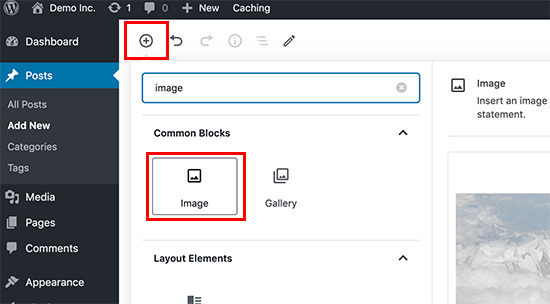
To upload images in WordPress posts and pages, you simply need to add the image block to the content editor.

Adding an image block to a WordPress post or page

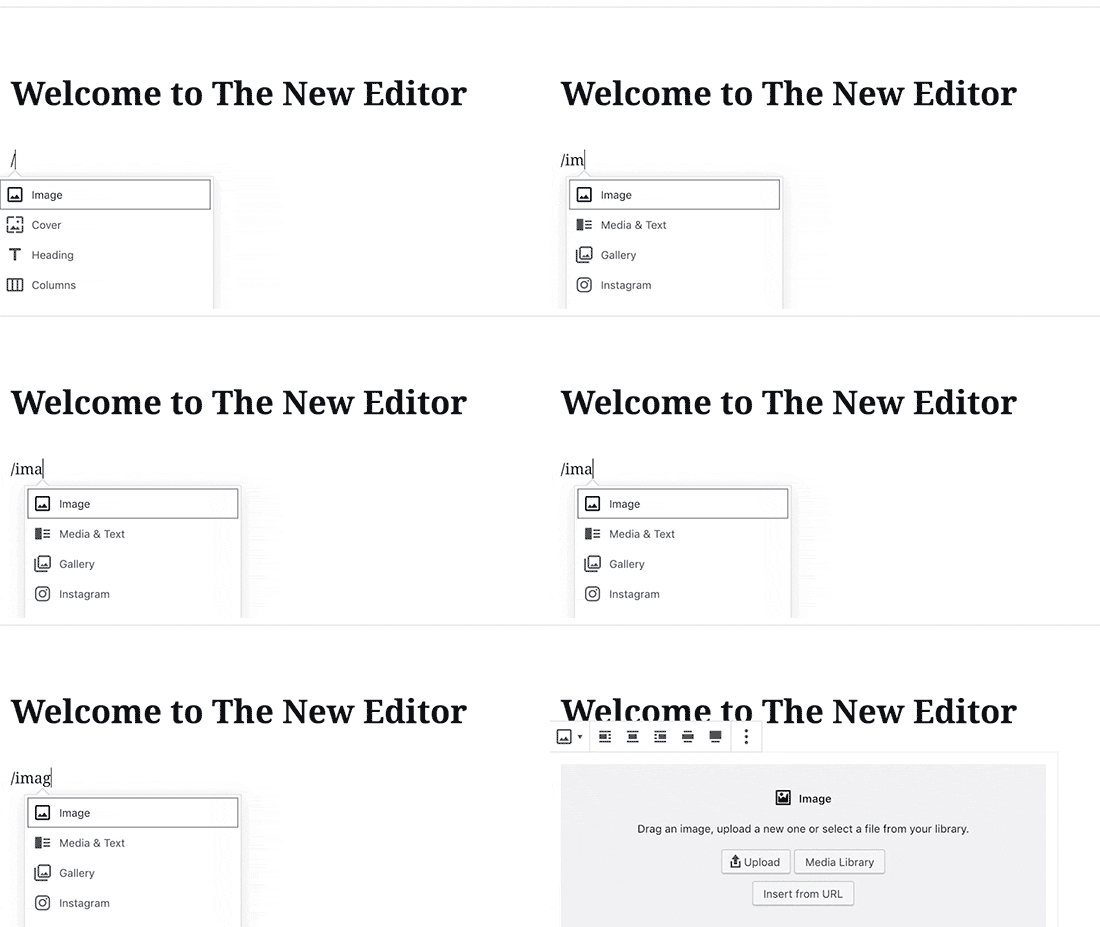
You can also add the image block by simply typing /image in a paragraph block. The editor will start showing blocks you can insert as soon as you start typing.

Adding image block

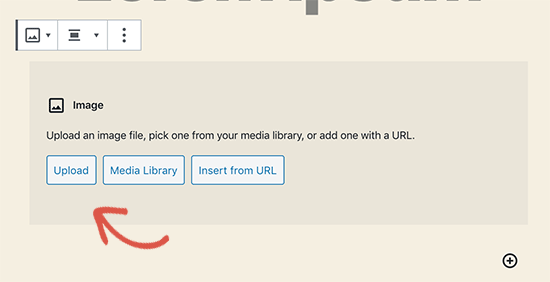
WordPress will now add the image block to the editor. You need to click on the ‘Upload’ button to select and upload the image from your computer.

Select and upload image

You can also select a previously uploaded image from your media library.

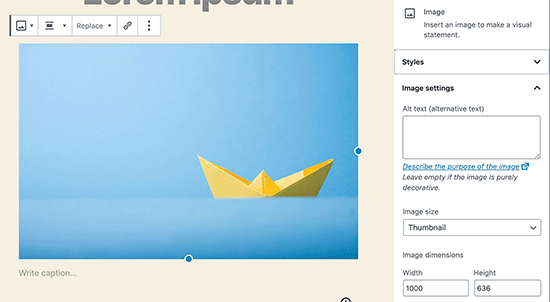
After uploading the image, you’ll see a live preview of the image in the content editor.

Image preview

You’ll see a bunch of image settings on the right panel. From there you can provide image alt text, select image size, and image style.

2. How to Align Image to the Left or Right in WordPress?

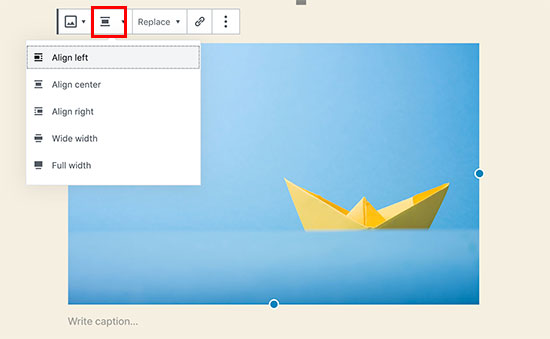
WordPress makes it easier to align images to the left, right, or center. Simply select the image by clicking on it, and then click on alignment button from the block toolbar.

Image alignment options

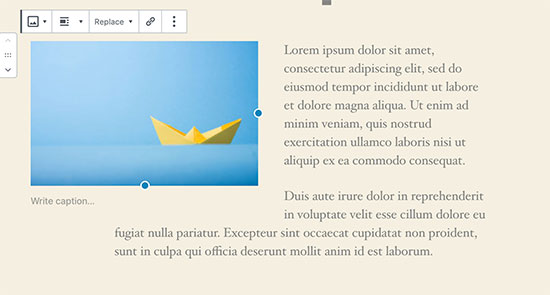
You may have noticed how some popular blogs use images with text wrapped around them. This is done by using the align feature.

Image aligned left with text on the right

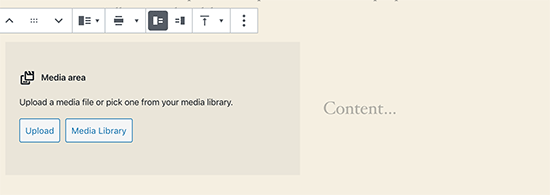
Alternatively, you can also use the ‘Media & Text’ block instead of the image block. This block is made specifically for adding images next to the text.

Media and text block

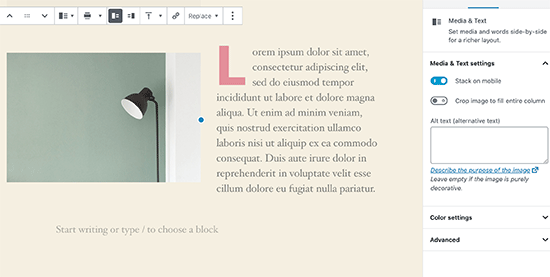
You can then upload an image and text side by side. You can also use the block toolbar to change the image or text side.

Image next to the text in WordPress

3. How to Add Caption below Images?

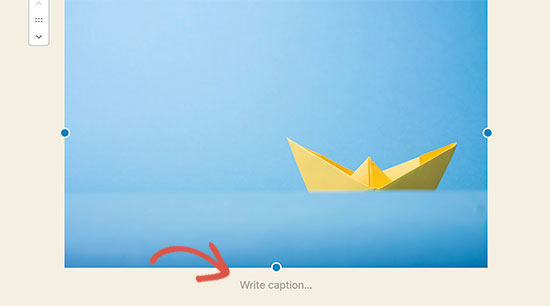
WordPress allows you to easily add caption for images. After you upload an image, you’ll see the option to add caption right below the image preview.

Write caption for an image in WordPress

Similarly, you can also add captions to image galleries in WordPress. For more details, see our guide on how to add captions to images in WordPress.

4. How to Display Photos in Columns and Rows?

Often users ask us how to neatly display photos in columns and rows.

Let’s say you want to share photos of a birthday party or vacation photos. You can add them one by one into a post, but this will look like a lengthy list of images.

The better way to group your photos is by creating image galleries.

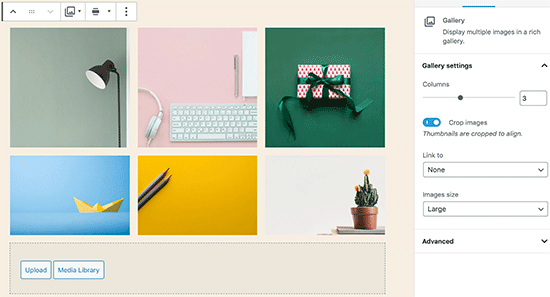
WordPress comes with a built-in gallery block that allows you to easily add images in rows and columns with thumbnail previews.

Simply add the gallery block to the post editor and select the images you want to upload.

Adding a gallery in WordPress

For more detailed instructions see our guide on how to create an image gallery in WordPress.

5. Create Beautiful Responsive Image Galleries in WordPress

Envira Gallery

You will notice that the default WordPress image galleries lack several features. For instance, they are also not very easy to browse.

If you often upload images and photographs to your WordPress site, then you will need a proper WordPress photo gallery plugin.

We recommend using Envira Gallery. It allows you to easily create beautiful and fully mobile-friendly image galleries on your WordPress site.

The best part is that it adds additional functionality like albums, gallery templates, social sharing, slideshows, watermarking, pagination, password protection, tagging, fullscreen view, and much more.

6. How to Fix Missing Post Thumbnails / Featured Image?

Most WordPress themes allow you to prominently display a featured image with your articles. Here is how to set a featured image in WordPress to avoid missing thumbnails.

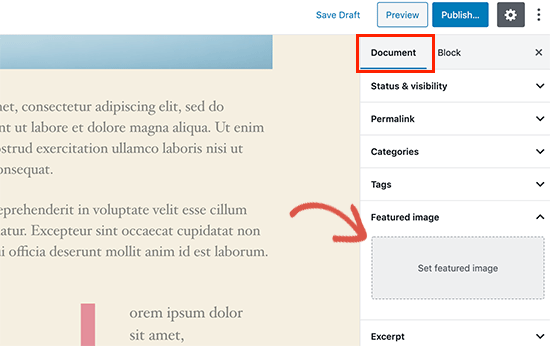
Setting a featured image for a WordPress post

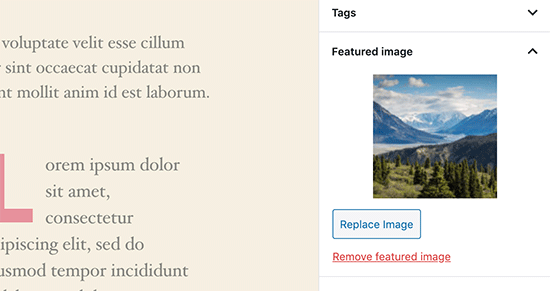
Now, you can click on ‘Set Featured Image’ to upload your post thumbnail. After uploading the image, you’ll be able to see your post thumbnail in the featured image meta box like this:

Featured image preview in post editor

For more details, see our guide on how to add featured image or post thumbnail in WordPress.

7. How to Add Cover Images in WordPress Posts and Pages

Cover images are the wide or full-width images that can be used as a separator between different sections of an article or a lengthy sales page.

They are highly engaging and help users easily scan a page without feeling overwhelmed by too much text.

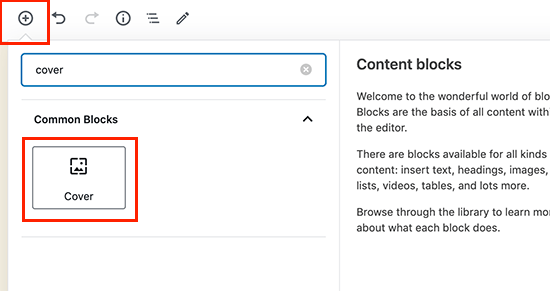
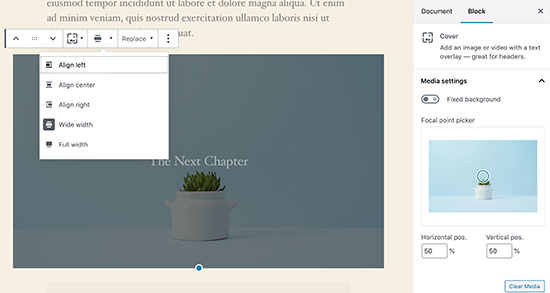
To add a cover image, you simply need to add the ‘Cover’ block to the content editor.

Adding cover block to WordPress post editor

Next, you need to upload the image you want to use from your computer or select one from the media library. If you don’t want to use an image, then you can also select a color background as the cover.

Tip: It is best to use a large image for a better result.

You’ll now see a liver preview of your cover image in the editor. You can change the cover image display options from the block toolbar or using the settings on the right.

Cover image preview

To learn more see our guide on the difference between cover image vs featured image in WordPress and how to use them effectively.

8. How to Fix Featured Image Appearing Twice Issue?

Inserting the featured image inside content is a common mistake made by beginners.

Once you set a featured image, you don’t need to insert it into the post editor along with your post content.

Doing so, will make your featured image appear twice. Once as the featured image, and once as an image inside the post.

Featured image appearing twice

You can add other images in your post, but your featured image goes in the featured image box.

For more details, see our guide on how to fix featured image appearing twice in WordPress posts.

9. Image too Big? How to Crop Images in WordPress?

When you are uploading images from your phone or camera they are usually too big.

WordPress automatically creates small, medium, and large image sizes for your original upload. But sometimes you may need to crop the image in a different size.

WordPress is no Photoshop, but it comes with some basic image editing features like scale, crop, flip and rotate images.

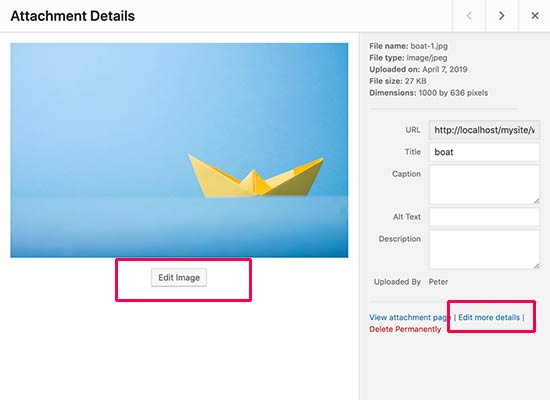
Go to Media » Add New and upload your image. After uploading the image, you will see an Edit link next to the uploaded image.

Clicking on it will open the Edit Media screen where you will see an Edit Image button right below the image. This will open the WordPress image editor.

Editing image in WordPress

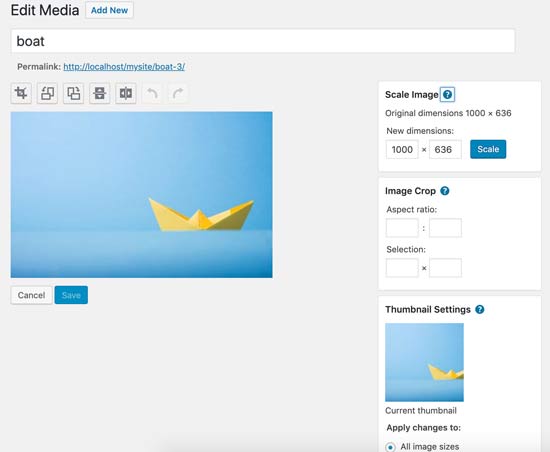
From here you can click on the ‘Edit Image’ button below the image preview. This will open the image editing screen.

On the image editor screen, you will see buttons to perform some basic image editing tasks such as cropping, rotating, resizing, etc.

WordPress image editing features

For more detailed instructions see our guide on how to crop, rotate, scale, and flip images in WordPress.

10. How to Add a Header Image in WordPress?

A header image in WordPress is a theme feature. Many WordPress free and premium themes comes with support for header image.

You can upload your own custom header image from the Appearance » Customize page.

Header options

Since it is a theme feature, many WordPress themes come with their own header options. Some allow you to set a site-wide header image, while others allow you to only set a header image for the homepage.

11. How to Add a Background Image in WordPress?

Just like the custom header image, custom background image is also a WordPress theme feature. Many WordPress themes come with support for custom background images.

Visit Appearance » Customize to launch the theme customizer. If you can see the Background Image option, then your theme has support for custom backgrounds.

Custom background

It is a theme feature which is why it varies from one theme to another. Depending on your theme you’ll see different options for styling your background image.

If your theme does not support background image, then you can still use a plugin to add full-screen background images to your website.

12. How to Find Free Images for Your WordPress Blog Posts?

Finding images for blog posts

Images can make your articles stand out. However, you must respect copyrights of other people and try to find images that you are legally allowed to use.

We are often asked by our readers about how to find best royalty free images to use in their posts?

There are many websites where you can find free images to use. However, you will soon notice that images on those sites look overused and generic.

See our list of the best sources for free public domain and CC0-licensed images on the internet.

13. How to Tag Images in WordPress?

If you run a photography blog, then you will notice that WordPress does not allow you to sort photos and images.

Wouldn’t it be great if you could add tags to your images, so that you and your users can easily browse them?

Luckily, there are some great plugins that allow you to do just that.

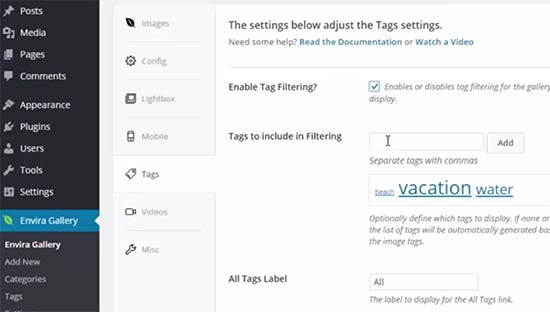
For a photography related blog, the best option is to use Envira Gallery which comes with an add-on to add tags.

Envira Gallery allows you to create beautiful, mobile-ready, photo galleries in WordPress. Using tags, your users can easily filter and sort photos without even reloading a page.

Envira Gallery tags feature

For more details, see our article on how to add categories and tags to WordPress media library.

14. How to Import External Images in WordPress?

This question often comes up when you are migrating your site to WordPress. Some images on your website may still be pointing to older location.

Specially users importing blogs from Blogger, Squarespace, or WordPress.com may face this problem.

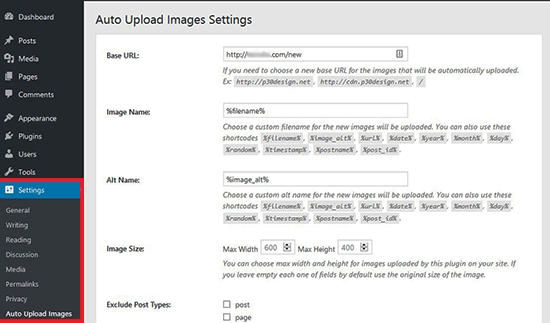
While the images on your site may appear correctly, they are still loading from external source. To solve this issue, all you need to do is install and activate Auto Upload Images plugin.

Auto upload image settings

The plugin will check for external images once you update or save any post or page. You can manually do that for each post or page or you can bulk edit all posts and simply click the update button.

For detailed instructions, see our guide on how to import external images in WordPress.

15. How to Require Featured Image for Posts in WordPress?

When running a multi-author site in WordPress, some of your authors may not be familiar with the featured image functionality.

In this case, you may want to remind yourself or your users to upload a featured image whenever they are submitting a post in WordPress.

You can do this by installing and activating the Require Featured Image plugin.

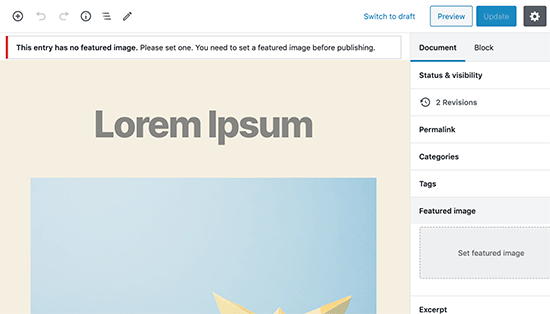
Once activated, the plugin will display a notification box in the post edit area, informing users that this post requires a featured image.

Require featured image

You and your users will be able to save posts as drafts, but you cannot publish the post until you add a featured image.

See our article on how to require featured images for posts in WordPress for more instructions.

16. How to Set a Default Featured Image in WordPress?

Finding the perfect featured image for every post or article is a tough task. Sometimes you may not want to add a featured image to a post, but your theme may look awkward without a featured image.

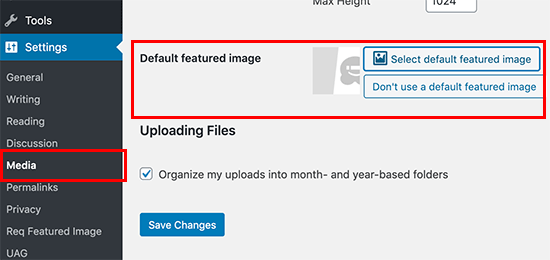
This is where a default featured image can come in handy. A default featured image is used when an article does not have a featured image of its own.

You can set a default featured image by using the default featured image plugin.

Default featured image

We hope this article helped you fix some of the most common image issues in WordPress. You may also want to see our list of the most common WordPress errors and how to fix them.

If you liked this article, then please subscribe to our YouTube Channel for WordPress video tutorials. You can also find us on Twitter and Facebook.

The post How to Fix Common Image Issues in WordPress appeared first on WPBeginner.


April 09, 2020 at 03:00PM