Monday, February 8, 2021

How to Add a Custom Domain Alias for Your WordPress Landing Page

Do you want to add a custom domain alias for your WordPress landing page?

Instead of installing a separate WordPress website, wouldn’t it be nice if you could use your existing WordPress to make landing pages and point different domains to specific custom landing pages?

In this article, we’ll show you how to easily add a custom domain alias for your WordPress landing page.

Adding a custom domain for your WordPress landing page

Why Add a Custom Domain for a WordPress Landing Page?

Let’s say you have a blog where you publish cooking recipes on a domain name called mycookingrecipes.com. Now you want to sell online courses on your website.

A good way to promote your online courses business would be to have its own marketing website using a different domain name (for e.g. awesomecookingcourse.com).

Now, you can make a separate WordPress website and spend your time and money on that, or you can simply add a custom domain and point it to a landing page on your existing website.

This way you can create an awesome landing page (micro-site) that is highly optimized for conversions. At the same time, you can use the same WordPress installation for creating and selling courses.

Similarly, let’s say you are launching a new product on your WooCommerce store. You want to use a custom domain to promote that product without creating a separate WooCommerce store.

This allows you to save time on website maintenance tasks while keeping your WordPress website costs under control.

Another popular use-case for this solution is marketing agencies. If you’re creating PPC landing pages for clients and managing it through a platform like Unbounce, you can now significantly reduce your bill by doing that all from a single WordPress install while still using clients’ custom domains.

That being said, let’s take a look at how to easily add a custom domain alias to your WordPress landing page.

What Do you Need to Add a Custom Domain Alias for Your WordPress Landing Page?

First, you’ll obviously need a new domain name. We recommend using Domain.com as they are one of the best domain name registrars on the market.

They have competitive pricing and you are free to use your domain name with any WordPress hosting company.

Secondly, you’ll need to make sure that your WordPress hosting company allows you to use multiple domains pointing to the same WordPress website.

Lastly, you’ll need SeedProd. It is the best WordPress page builder plugin on the market with a built-in feature to use a custom domain for any landing page on your website.

Note: You’ll need at least their Pro plan to access the domain mapping feature.

Creating Your Landing Page in WordPress

We will start by creating the landing page on your existing WordPress website.

First, install and activate the SeedProd plugin. For more details, see our step by step guide on how to install a WordPress plugin.

Upon activation, you need to visit SeedProd » Settings page to enter your license key. You can find this information under your account on the SeedProd website.
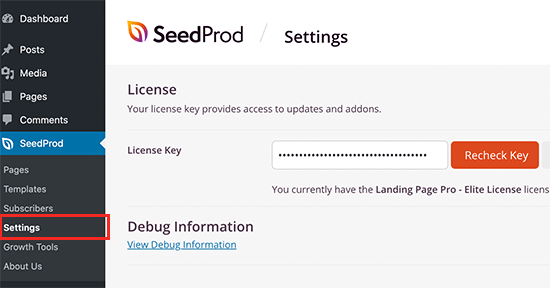
SeedProd License Key

Next, you need to visit SeedProd » Pages page and then click on the ‘Add New Landing Page’ button.
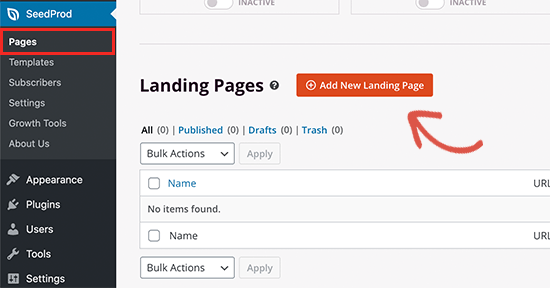
Creating a new landing page

On the next screen, you’ll be asked to choose a template. SeedProd comes with several professionally designed templates that you can use as a starting point.
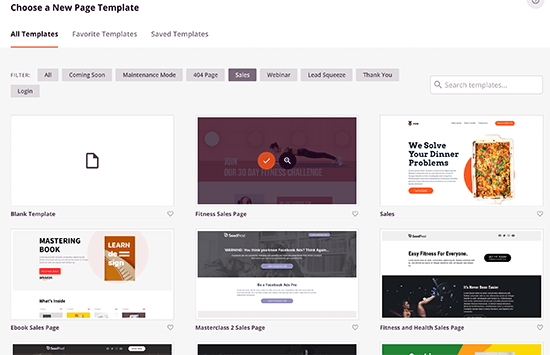
Choose landing page template

Simply click to select the template you want to use. You’ll be asked to provide a name for your landing page and choose a URL slug.
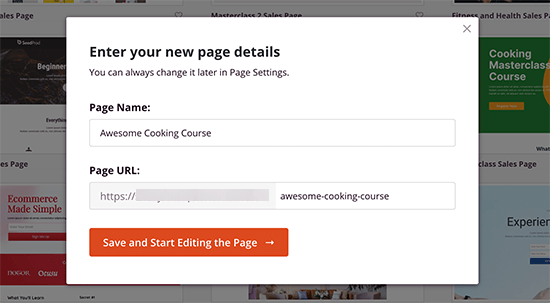
Choose page name and URL slug

After entering the required information, click on the ‘Save and Start Editing the Page’ button to continue.

This will launch the SeedProd’s drag and drop page builder interface.

SeedProd's page builder

The page builder is super easy to use. Simply point and click on any item on the page to edit and change it. You can also add new elements by adding blocks from the left panel.

It comes with all commonly used blocks needed to make any type of landing page. You can also add complete sections by switching to the sections tab.

Add complete sections to your landing page

There are common sections like header, footer, hero image, call to action, and more.

You can change any element on your landing page by changing its properties like fonts, size, colors, background images, and more.
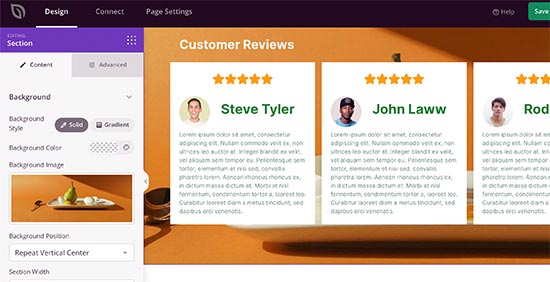
Editing in SeedProd page builder

You can also connect your landing page to third-party tools by switching to the ‘Connect’ tab. SeedProd supports all top email marketing platforms, Google Analytics, and over 2000+ other apps via Zapier.
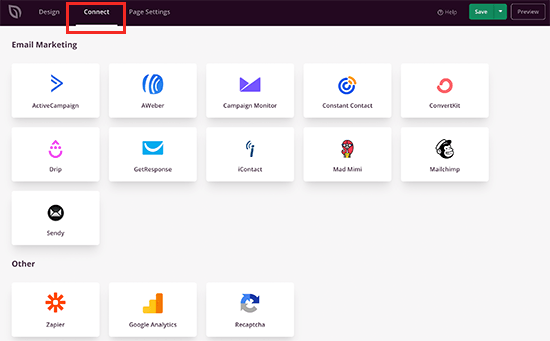
SeedProd integrations

Once you are satisfied with your landing page, you can click on the Save button to publish your landing page.
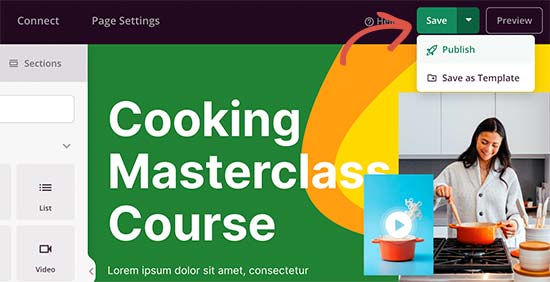
Save and publish your landing page

Adding Custom Domain to Your Landing Page

Now that your landing page is ready. Let’s tell SeedProd that this landing page will be displayed by using a custom domain alias.

To do that, you need to simply edit the page and switch to the ‘Settings’ tab. Ther you’ll find the ‘Custom Domain’ option where you need to switch the toggle to turn ON the custom domain.
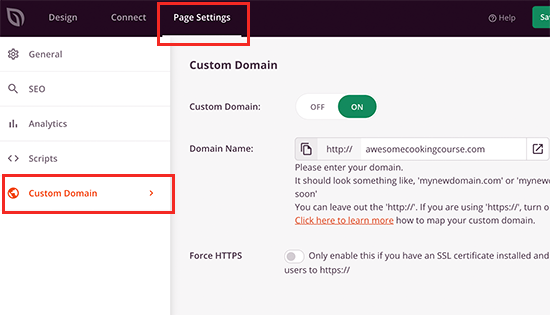
Setting custom domain for your landing page

Below that, you need to provide the domain name that you want to use.

If your custom domain name has an SSL certificate enabled for it, then you need to switch the force HTTPs option as well.

Don’t forget to click on the Save button to store your changes.

If you tried visiting your landing page now, it will show you an error. That’s because SeedProd is trying to use your custom domain name, but the domain name doesn’t point to your website yet.

Let’s change that.

Setting up Custom Domain Alias

You need to point your custom domain alias to your WordPress hosting provider. You can do that by editing the DNS nameservers under your domain registrar account.

Nameservers are part of the global database of the domain name system. Their job is to tell other computers where to find a domain name.

You can find out which nameservers to use for your hosting company by asking their support team. For instance, Bluehost uses the following nameservers for most websites:

ns1.bluehost.com
ns2.bluehost.com

Once you find out the nameservers used by your hosting provider, you need to write them down as you’ll need this information in the next step.

For the sake of this tutorial, we’ll be showing you how to do that for a domain registered at Domain.com by pointing it to Bluehost. However, the basic instructions are the same for most domain registrars.

First, you need to log in to your Domain.com account. After that, you need to click on the ‘DNS & Nameservers’ link in the left-hand sidebar.
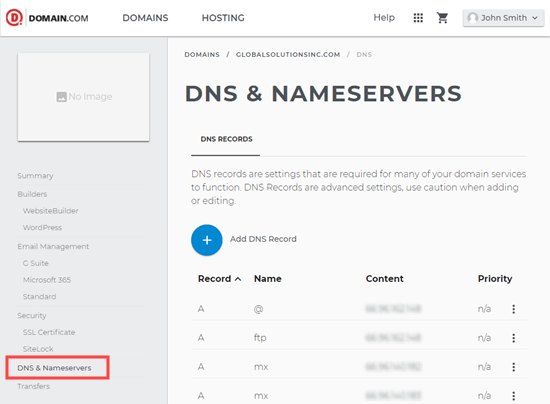
Editing DNS nameservers on Domain.com

Before you start, make sure the correct domain is selected at the top of the screen. Once you have verified the domain is correct, simply scroll down to the NS records section.

First, click the 3 vertical dots next to ns1.domain.com then select Edit.
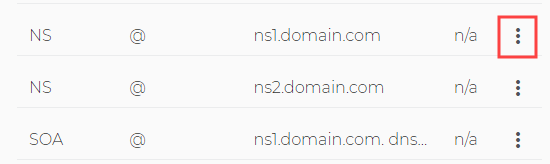
Editing nameserver

You will see a popup where you need to edit the nameserver record. Simply type the new nameserver in the ‘Content’ box then click the ‘Update DNS’ button.
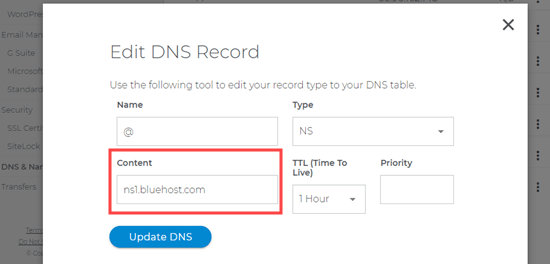
Updating nameservers

Repeat the same process for the ns2.domain.com nameserver record too. You will see your updated nameservers in the list.

Nameservers updated

For more details and other domain name registrars please see our guide on how to easily change DNS nameservers.

Adding Custom Domain to Your Hosting Account

Now that your custom domain is pointing to your WordPress hosting provider, the next step is to add it to your hosting account.

We’ll show you how to add your domain name in Bluehost. However, the process is the same for most hosting providers.

Simply login to your hosting account dashboard and then go to Domains » Assign page. Here, you need to enter the domain name that you want to add under ‘Use a domain that is not already associated with your account’.
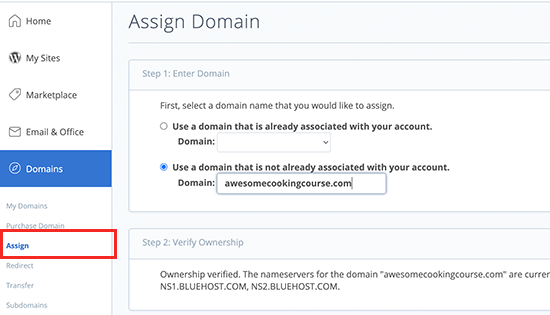
Adding an addon domain in Bluehost

Bluehost will now check if the domain name points to their nameservers. After that, you can scroll down to ‘Addon vs Parked’ section and select ‘Addon’ option.
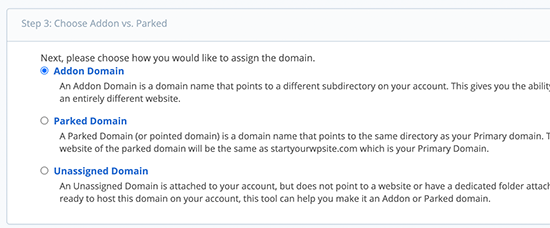
As an addon domain

Below that, you will be given the option to select the directory (folder) you want to use for this domain. You need to choose the directory where your WordPress site is installed.
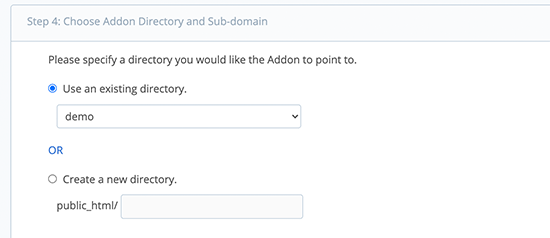
Choose directory

If you are unsure, you can simply choose public_html option below.

Finally, click on the ‘Assign this domain’ button to add your domain name.

That’s all, you can now enter your custom domain alias in a new browser tab, and it will automatically show your WordPress landing page.

Landing page preview

We hope this article helped you point your custom domain alias to your WordPress landing page. You may also want to see our guide on how to create an email newsletter, and our comparison of the best business phone services to boost your landing page conversions.

If you liked this article, then please subscribe to our YouTube Channel for WordPress video tutorials. You can also find us on Twitter and Facebook.

The post How to Add a Custom Domain Alias for Your WordPress Landing Page appeared first on WPBeginner.


February 08, 2021 at 04:22PM

Friday, February 5, 2021

7 Best WordPress Job Board Plugins and Themes

Are you looking for the best WordPress job board plugin? There are several plugins that you can use to easily create an online job board. This can be a way to publish jobs for your own company or to charge other companies to list their jobs.

In this article, we will go through the best WordPress job board plugins and themes that you can use.

Best WordPress job board plugins and themes

Building a Job Board Website with WordPress

WordPress is currently one of the most popular website builders in the market, powering more than 39% of all websites on the internet. It can be used to build almost any kind of website including a job board website.

There are two types of WordPress websites, which often confuses new users. First, there is WordPress.com, a hosted solution. Second, you have WordPress.org, also called self-hosted WordPress. See our article on WordPress.com vs WordPress.org for a side-by-side comparison.

We strongly recommend using self-hosted WordPress.org. It gives you instant access to all WordPress features and functionality without any restrictions.

To get started, you will need a domain name and website hosting. A domain name is your site’s address on the web, like wpbeginner.com or google.com. Web hosting is the storage for all your website files.

We recommend using Bluehost. They are an officially recommended WordPress hosting provider, and one of the largest web hosting companies in the world.

The Bluehost special offer for WPBeginner readers

Bluehost is offering our readers a huge discount on their web hosting package. You also get a free domain and a free SSL certificate.

After you have purchased hosting, follow our step by step guide on how to make a website.

Once you have created your WordPress site, you can install a job board plugin or theme.

Let’s take a look at some of the best WordPress job board plugins and themes that you can use to build a job board website.

1. WP Job Manager

WP Job Manager

WP Job Manager is an extremely easy to use WordPress job board plugin from Automattic. Simply create new pages, add shortcodes, and you can have a live job portal in minutes. It allows recruiters to register on your website and post their job listings. Job hunters can also manage their listings from a simple dashboard.

You can also use it to make money online with paid job postings through premium add-ons. It also has add-ons to send email alerts, to monetize your job board using WooCommerce, add a resume manager, and more.

For detailed instructions, see our article on how to create a job board in WordPress.

2. WPJobBoard

WPJobBoard

WPJobBoard is a paid WordPress job board plugin that allows you to add a powerful job search engine to your website. It includes a front-end admin panel for employers and recruitment agencies to submit jobs and resumes. It also includes a resume database and employer portal allowing users to search for the right candidate.

The plugin integrates with all WordPress themes and comes with its own free theme as well. It also allows you to accept payments, offer coupons, discounts, and even membership packages to employers.

3. Job Board Manager

Job Board Manager

Job Board Manager is another great plugin to add a job board to your WordPress website. It’s user-friendly and comes with a shortcode that you can add to different pages for displaying job listings, adding a new job listing, showing the user dashboard, and more.

Job Board Manager is SEO friendly and uses Schema.org rich snippets markup for job listings.

It comes with free add-ons to add company profiles, locations, widgets, and breadcrumbs. You can also use paid add-ons for WooCommerce paid listings, job alerts, an applications manager, and more.

4. Simple Job Board

Simple Job Board

Simple Job Board is another easy to use WordPress job site plugin. It’s a simple, lightweight plugin that does not allow employers to create an account on your website or add their own job listings.

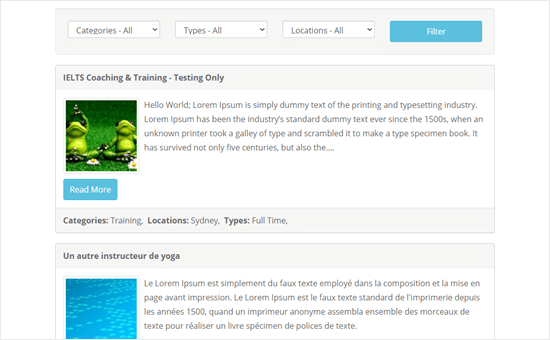
Instead, you can use it to manually enter job openings with categories and job types. There are no built-in monetization options in the plugin settings, but you can extend it by adding a simple order form in WordPress.

Simple Job Board allows you to add as many details for each listing as needed. You can display custom job application forms for job listings.

5. Apply Online

Apply Online

Apply Online is a classified ads management plugin that allows users to quickly respond to listings. It allows you to easily add a job board to your website and start accepting applications.

It has powerful features like ad categories, filters, application form fields, email notifications, and more. One disadvantage is that you cannot use it to create a paid job listings website, and you will need to add a membership plugin to create subscription plans or use a contact form plugin to accept orders.

6. JobRoller

JobRoller

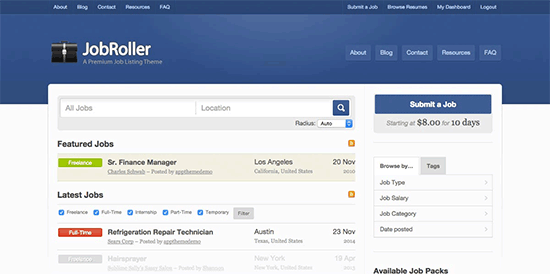
JobRoller is a powerful WordPress job board theme. It comes with excellent monetization options allowing you to get paid for job listings. It includes separate sections to create a blog page or add landing pages to your job board website.

It supports both employers and job seeker accounts, includes a resume or CV bank, has a job submission form, and comes with Ajax-powered search / filter features. It has multiple display options and a powerful theme options panel which helps you quickly set up everything.

7. JobEngine

JobEngine

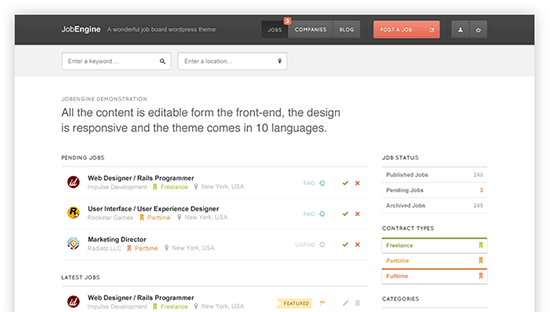
JobEngine is a WordPress app theme designed to create a powerful job board website. It has a special front page template to welcome your website visitors.

Job Engine allows your users to easily create an account and list jobs. You can charge for the job openings on a per job basis or create premium plans. You can also sell featured listings separately. It supports PayPal, Stripe, 2Checkout, and Authorize.net payment gateways.

As a theme, it has lots of color customization choices and design options to control the appearance of your job board. You can customize it on the front end using the built-in page builder. It has multiple sidebars, landing page options, and is translation-ready to support multilingual websites.

We hope this article helped you find the best WordPress job board plugins and themes for your website. You may also want to see our ultimate guide to WordPress SEO to help your job board rank well in Google and other search engines.

If you liked this article, then please subscribe to our YouTube Channel for WordPress video tutorials. You can also find us on Twitter and Facebook.

The post 7 Best WordPress Job Board Plugins and Themes appeared first on WPBeginner.


February 05, 2021 at 05:13PM

Thursday, February 4, 2021

Beginner’s Guide: How to Publish a Website in 2021 (Step by Step)

Do you want to publish a website but are worried about technical stuff?

It is a misconception that you need to be a web designer or developer to code a website. There are many tools that make it super easy to put your website online without writing any code.

In this article, we’ll show you how to easily publish a website with step by step instructions.

A beginners guide on publishing a website online

Using a Website Builder to Publish a Website

Most beginners feel that they need to learn programming and web design skills to publish their websites.

It was true in the early days of the internet. At that time, businesses hired web developers or they had to learn coding skills to publish a website on their own.

However, things have changed over the years and technical skills are no longer a hurdle in publishing your content on the web.

These days, beginners, businesses, and even developers use website builders like WordPress to easily publish websites.

More than 69% of all websites on the internet are built using a website builder or CMS platform. This means, even developers don’t need to write code from scratch to publish a website.

These platforms allow anyone in the world to easily publish a website and put it on the internet. We’ll show you the easiest and most popular way to publish your website (no coding required).

1. Publish a Website with WordPress

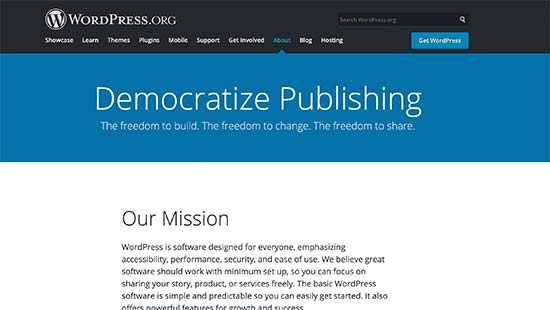
WordPress is the most popular website builder on the market with the slogan ‘Democratize Publishing’. It is a free (as in freedom) and open-source software that anyone can use to build any type of website.

WordPress mission is to democratize publishing

Over 39% of all websites on the internet are powered by WordPress.

To get started with WordPress, you’ll need a domain name (e.g. wpbeginner.com) and web hosting (this is where your website files are stored).

We recommend using Bluehost. They’re offering WPBeginner users a free domain name and a generous 60% discount on hosting ($2.75/month).

If you want to try an alternative, then we recommend SiteGround or any of these top WordPress hosting providers.

Next, you’ll need to install WordPress. We have a step by step WordPress installation tutorial that’ll walk you through the installation process.

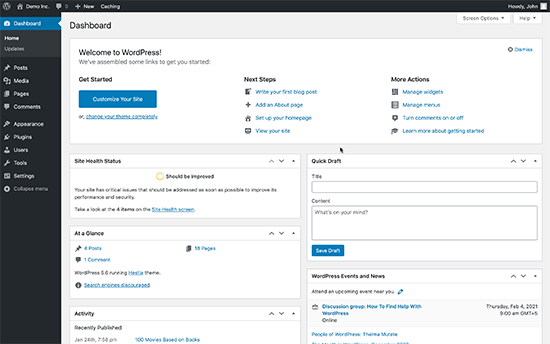
Once you have installed WordPress, you’ll see the WordPress dashboard which looks like this.

WordPress dashboard

Next, you need to install and activate the SeedProd plugin. For more details, see our step by step guide on how to install a WordPress plugin.

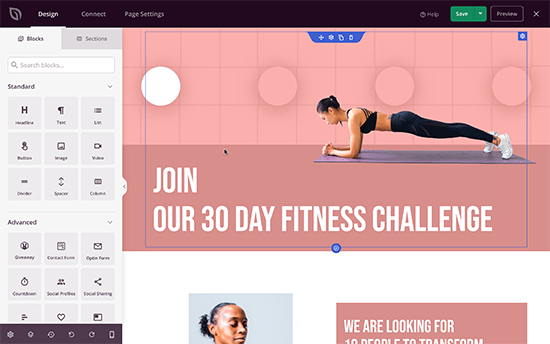
SeedProd is the best WordPress page builder plugin. It allows you to quickly publish professionally designed web pages for your website using a simple drag and drop user interface.

SeedProd user interface

It is super easy to use and allows you to quickly publish your website with professional designs that are already optimized for sales, conversions, and SEO.

Alternatives to SeedProd

There are several popular page builder tools for WordPress. You can use any of the following to publish your website without any coding or design skills.

  • Beaver Builder – A drag and drop WordPress website builder with advanced theme customizations
  • Divi Builder – Another beginner friendly WordPress theme builder with tons of ready made templates
  • Elementor – A powerful page builder tool for WordPress suitable for both beginners and developers

We believe WordPress is the most beginner-friendly platform to publish your website.

It is widely used and trusted by millions of beginners as well as big name brands like Microsoft, Facebook, and even US government uses WordPress to power the The White House website.

The best part about WordPress is that there are over 58,000 WordPress plugins that let you add just about any functionality to your website such as online store, contact form, SEO features, and more.

You can think of plugins like addons or apps for your iPhone. They make it easy for even first time users to configure and publish a website that search engines love and is easy to use for your customers.

2. Publish a Website with Contact Contact Website Builder

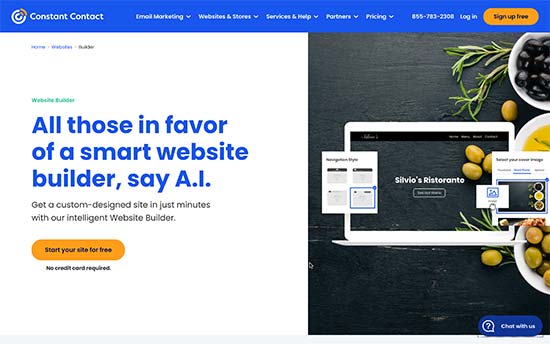
Constant Contact Website builder is an AI-powered website publishing tool suitable for beginners and small businesses.

Constant Contact Website Builder

If you don’t want to go through the trouble of purchasing hosting, domain name, and installing a web application software, then Constant Contact Website Builder would be the right tool for you.

It is an AI-powered website publishing tool that allows you to simply follow a step by step wizard. You’ll answer some questions and it will generate ideal layouts for you complete with the dummy content.

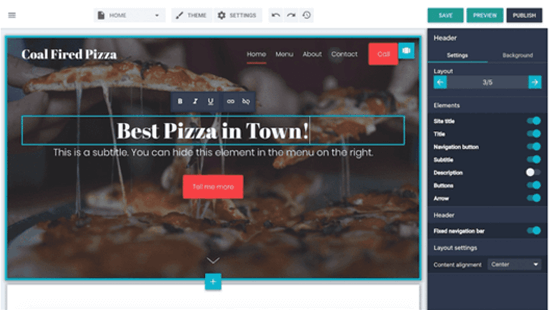
You can customize it in any way you want using a simple drag and drop interface. Once you’re done, simply click the Publish button.

Constant Contact customizer

The best part about using Constant Contact Website Builder is that you don’t need to worry about hosting or updates. You also get reliable support via chat, phone, and email.

If you simply want to publish a small business website or a quick online store, then it gets the job done with very little effort.

Alternatives to Constant Contact Website Builder

There are plenty of other fully-hosted, drag and drop website publishing platforms similar to Constant Contact. Following are a few hosted website builders picked by our expert team.

  • Wix – a fast growing website builder platform that has all the features you’d need to build a website.
  • Gator by HostGator – Fully hosted website builder by the folks behind HostGator. It comes with an intuitive drag and drop publisher with beautiful templates.
  • Domain.com Website Builder – A fully hosted website builder with beautiful templates to quickly publish a website.
  • GoDaddy – a large domain name registrar that also offer website builder tools.

All of these platforms are easy to use and allow you to publish your website without writing code.

3. Manually Publish Your Website

For those of you are who are eager to learn and willing to dive into basic HTML, CSS, and JavaScript, then this is the route you can take.

Note: If you don’t have any previous experience with these programming languages, then it may take you a while to get enough basic grip to code a reasonably presentable website and publish it online.

There are several online course platforms for students offering courses on web development for beginners. We recommend checking out the one offered by the CodeAcademy.

You can make a website on your computer, but you will still need a domain name (web address for your site) and website hosting service to publish it online.

All websites on the internet need hosting. It provides you storage on an online web server where you can upload and store your website files.

You can sign up with Bluehost which is one of the biggest hosting companies in the world. They are offering WPBeginner users a generous discount + free domain name + free SSL certificate.

Once you have signed up for a hosting account, you can upload the website files from your computer to your website by using an FTP client.

Alternatively, if your web hosting provider has cPanel, then you can use their built-in file manager for uploading your website in the public_html folder. This saves you from learning how to use the FTP server.

We hope this article helped you learn how to easily publish a website. You may also want to see our guide on how to create a professional business email address, and how to get a virtual business phone number for your small business.

If you liked this article, then please subscribe to our YouTube Channel for WordPress video tutorials. You can also find us on Twitter and Facebook.

The post Beginner’s Guide: How to Publish a Website in 2021 (Step by Step) appeared first on WPBeginner.


February 04, 2021 at 06:00PM